ETIAS & Schengen Visas: Europe Entry Requirements in 2026
Entry rules verified against the official EU pages on 6 June 2026.
I’ve crossed European borders more times than I can count, and in fifteen years of editing Europe guides, I have never seen as much confusion about entry rules as right now. Readers email me weekly: “Do I need ETIAS yet? What’s this fingerprint thing at passport control? Is the 90-day rule changing?” Fair questions, because Europe is mid-way through the biggest border overhaul in a generation.
Here’s the short answer: as of June 2026, you do not need ETIAS. The new €20 travel authorisation launches in the last quarter of 2026 and won’t be mandatory until around April 2027. What HAS changed is the EES — since 10 April 2026, Europe’s Entry/Exit System photographs and fingerprints every non-EU visitor instead of stamping passports.
This ETIAS guide untangles all of it: ETIAS, the EES, the 90/180-day rule and the classic Schengen visa. It covers who needs what, what each costs, and what actually happens at the border. It’s the briefing I give friends before any trip, whether they’re planning a two-week European itinerary or a slow summer around the Mediterranean. If you’re starting from zero, my guide on how to plan a trip to Europe pairs well with this one.
Europe’s entry requirements at a glance (June 2026)
Four systems govern short visits to Europe. Most travellers only ever deal with two of them: the EES at the border, and (from late 2026) ETIAS before departure. Here’s how they fit together:
| System | What it is | Who it affects | Cost | Status (June 2026) |
|---|---|---|---|---|
| EES (Entry/Exit System) | Biometric border registration — photo + fingerprints replace passport stamps | All non-EU visitors on short stays, at every external border | Free | Live — fully operational since 10 April 2026 |
| ETIAS | Online pre-travel authorisation linked to your passport, valid 3 years | Visa-exempt nationals (US, UK, Canada, Australia + ~55 more) | €20 (free under 18 / over 70) | Not yet required — launches Q4 2026, mandatory ~April 2027 |
| 90/180-day rule | Stay limit: max 90 days in any rolling 180-day window | All visa-exempt visitors to the Schengen area | — | In force (and now enforced digitally by the EES) |
| Schengen visa (Type C) | Traditional short-stay visa with consulate application | Nationals of countries without visa-free access (e.g. India, China, South Africa) | €90 adult / €45 child 6–11 | In force, unchanged |
One thing that table can’t show: none of these systems replaces the others. From 2027, a typical American or British visitor will need a valid passport, an ETIAS authorisation, an EES registration at the border, and still has to respect the 90/180 rule. Sounds like a lot; in practice it adds minutes, not hours, to a trip. For a country-by-country breakdown of paperwork, see my full guide to Europe travel requirements.
What is ETIAS, exactly?
ETIAS, the European Travel Information and Authorisation System, is an electronic pre-screening for travellers who don’t need a visa for Europe. Think of it as Europe’s answer to America’s ESTA or the UK’s ETA: a quick online form that links a security check to your passport before you board, rather than a visa application with appointments and interviews.
I want to be precise here, because half the articles on page one get this wrong: ETIAS is not a visa. There’s no consulate visit, no biometrics at application, no documents to courier, no interview. You fill in a form online, pay €20, and in most cases the approval lands in your inbox within minutes. The EU itself is emphatic on the distinction. It matters, because if anyone tells you that you need a “Schengen visa” as an American, Brit, Canadian or Australian tourist, they’re confusing two very different things. I unpack the nuances in what is ETIAS and do I need a visa for Europe.
The key facts, distilled:
- Cost: €20 per application. Free if you’re under 18 or over 70 (you still apply; you just don’t pay).
- Validity: 3 years, or until your passport expires, whichever comes first. Multiple entries allowed.
- Coverage: 30 European countries: the 29 Schengen members plus Cyprus.
- It does not change stay limits: the 90 days in any 180 rule still applies on top.
- It’s tied to your passport number: renew your passport and you’ll need a new ETIAS, even if the old one had years left.
- Approval is not entry: border officers make the final call; ETIAS just lets you board the plane, train or ferry.
For value, it’s hard to grumble. America’s ESTA now costs $40, covers one country and lasts two years. ETIAS costs €20, covers thirty countries and lasts three. As someone who pays for both, I know which one stings less.
ETIAS 2026 timeline: the key dates (and what applies to your trip)
The honest history: ETIAS was first pencilled in for 2021, and the start date has slipped so many times that I stopped updating my calendar and started checking the official EU site before every trip instead. The current timeline, though, finally looks solid, because the system ETIAS depends on (the EES, below) is now fully running.
| Date | What happens | What it means for you |
|---|---|---|
| 12 October 2025 | EES begins progressive rollout | Biometric registration starts appearing at European borders |
| 10 April 2026 | EES fully operational at all external borders of 29 countries | Passport stamps gone; photo + fingerprints at every first entry (this is the system you’ll meet TODAY) |
| Q4 2026 (Oct–Dec) | ETIAS launches | Applications open; the EU has promised several months’ public notice of the exact date |
| First ~6 months after launch | Transitional grace period | You should apply, but travellers without ETIAS can still cross if they meet the other entry conditions |
| ~April 2027 | ETIAS becomes mandatory | Airlines and ferries deny boarding without a valid ETIAS (a final leniency window applies for first-time arrivals) |
| ~Late 2027 | Full enforcement | No exceptions — no ETIAS, no entry |
The practical takeaway for 2026 trips: if you travel before roughly October 2026, ETIAS doesn’t exist yet and you can ignore it entirely. If you travel in late 2026 or early 2027, check the official site a month or two before departure. Applications will likely be open, and getting your authorisation early costs nothing extra and removes a variable. Summer 2027 onwards, treat it like packing your passport. Timing a trip around all this? My month-by-month guide to the best time to visit Europe covers crowds and weather; the paperwork, happily, is season-proof.
How much does ETIAS cost — and who pays nothing?
The fee is €20, set by the European Commission in July 2025 (it was originally €7; inflation and cybersecurity costs got the blame, and aligning with the US ESTA at $40 and the UK ETA at £16 surely didn’t hurt). It’s a one-off payment per application, by card, at the moment you apply.
You pay nothing (though you must still apply) if you are:
- Under 18 on the date of application (parents can apply on a child’s behalf; every traveller, including infants, needs their own ETIAS)
- Over 70 on the date of application
- A family member of an EU citizen covered by free-movement rules
A family of four with two kids therefore pays €40 total, not €80. It’s one of the few times Europe’s bureaucracy errs in a family’s favour. Compare that with the same family paying $160 for ESTAs to visit the US and the €20 starts to look almost quaint. For more ways to keep the admin column of your budget lean, my Europe travel tips guide has a whole section on avoidable fees.
How to apply for ETIAS (when applications open)
The application will live in two official places only: the EU’s ETIAS website (travel-europe.europa.eu/etias) and an official ETIAS mobile app. Based on the EU’s published specification, here’s the process. I’ll keep this section updated as the launch approaches, and there’s a step-by-step walkthrough in my dedicated guide to how to apply for ETIAS.
What you’ll need
- Your passport (the exact one you’ll travel on; ETIAS is electronically linked to its number)
- Your home address, phone number and email
- Your occupation and education details
- Details of your first intended stay (you don’t have to stick to them)
- Honest answers to background questions: criminal convictions, past travel to conflict zones, previous deportations or refusals
- A debit or credit card for the €20
How long it takes
The EU says the vast majority of applications will be decided within minutes. If your application is flagged for manual review, the decision can take up to 96 hours, and in rare cases where extra information or an interview is requested, up to 30 days. That’s why every official communication repeats the same advice I’ll give you: apply before you book non-refundable travel, or at minimum a few weeks out. Don’t be the person filling in the form at the departure gate in 2027.
If you’re refused
Refusals are expected to be rare (the screening targets security and immigration risks, not tourists with messy handwriting). If it happens, you’ll get the reason in writing and a right of appeal with the member state that refused you. A refusal isn’t a ban: you can reapply with corrected information, and plenty of early refusals will be simple typos in passport numbers. Triple-check that field; a mismatch between ETIAS and passport is the one error that will genuinely strand you at check-in.
Who needs ETIAS — and who doesn’t?
ETIAS applies to citizens of the roughly 59 visa-exempt countries and territories: the people who today stroll into Europe with nothing but a passport. The big ones:
- United States: yes, all US passport holders (my detailed guide: ETIAS for US citizens)
- United Kingdom: yes, a post-Brexit reality; UK citizens needed nothing before 2021
- Canada, Australia, New Zealand: yes
- Japan, South Korea, Singapore: yes
- Plus Brazil, Mexico, Argentina, Israel, Georgia, Ukraine, the Western Balkans and ~40 more
You do not need ETIAS if you are:
- An EU citizen or a citizen of a Schengen country (Norway, Iceland, Switzerland, Liechtenstein), including Irish citizens
- A resident of an ETIAS country with a residence permit or long-stay visa (your permit is your authorisation)
- A national who needs a Schengen visa: your visa application already includes deeper screening, so ETIAS doesn’t apply to you (skip ahead to the visa section)
- Holding a dual EU passport: travel on the EU one and the whole question evaporates
That last point trips up more readers than any other: ETIAS is for visa-exempt non-EU visitors. It’s a middle lane between “EU citizen, walk through” and “visa-required, see a consulate”. If you’re unsure which lane you’re in, start with do I need a visa for Europe; it sorts you in about ninety seconds.
Which countries require ETIAS? All 30, mapped to your trip

ETIAS covers 30 countries: the 29 members of the Schengen area plus Cyprus (an EU member that hasn’t fully joined Schengen yet but applies the same authorisation). In practice it’s almost every country you’d shortlist for a European holiday:
| Region | ETIAS countries |
|---|---|
| Western Europe | France, Germany, Netherlands, Belgium, Luxembourg, Austria, Switzerland, Liechtenstein |
| Southern Europe | Italy, Spain, Portugal, Greece, Malta, Cyprus, Croatia, Slovenia |
| Northern Europe | Denmark, Sweden, Norway, Finland, Iceland, Estonia, Latvia, Lithuania |
| Central & Eastern Europe | Poland, Czechia, Slovakia, Hungary, Romania, Bulgaria |
Notice who’s missing. Ireland never joined Schengen and doesn’t use ETIAS; Americans and Brits visit Dublin exactly as before (and Brits don’t even need a passport check within the Common Travel Area). The UK runs its own mirror-image system, the UK ETA (£16), for travellers to Britain. Don’t confuse the two when you’re booking a London–Paris combo. The microstates (Monaco, San Marino, Vatican City, Andorra) have no airports and no external borders of their own; you reach them through France, Italy or Spain, so your ETIAS effectively covers them too.
Two recent changes catch out travellers who last visited a few years ago: Romania and Bulgaria became full Schengen members on 1 January 2025. Days spent in Bucharest or Sofia now count toward your 90/180 allowance, and there are no longer passport checks when you drive from Hungary into Romania. The full membership story is in my guide to the Schengen countries, along with the handful of European countries outside the system entirely (Ireland, the UK, Albania, Serbia, and friends). For inspiration on where all this paperwork can take you, the master list of the best places to visit in Europe is the natural next read.
The EES: the border change that’s already here
Planning a June to August trip? Our Europe in summer guide puts these border changes alongside the tourist taxes, visitor caps and the UK ETA that also apply this season.

While everyone frets about ETIAS, the genuinely transformative change already happened. The Entry/Exit System (EES) went fully live on 10 April 2026 at every external border crossing of 29 European countries, after a six-month phased rollout that began in October 2025. I cleared it at Lisbon airport in late April; here’s exactly what happens.
On your first entry since the rollout, instead of (or alongside) the booth officer, you’ll meet a kiosk or e-gate that scans your passport, takes a facial image and captures four fingerprints. The data goes into a central EU record that replaces the wet-ink passport stamp — your entries and exits are now logged digitally, to the day. Children under 12 skip the fingerprints. The registration took me about four minutes at a quiet mid-morning arrival; budget longer at peak times at the big hubs, because every traveller ahead of you who hasn’t registered is doing the same dance. On subsequent trips within three years, it’s a quick face-match against the stored record, noticeably faster than the old stamp queues, in my experience.
A few EES details worth knowing:
- It’s free and there’s nothing to do in advance: no form, no app, no appointment. (Anyone charging for “EES registration” online is a scam.)
- It applies to everyone on short stays: visa-exempt travellers and Schengen-visa holders alike. EU citizens and residents are exempt.
- UK departures register before you leave: Eurostar at St Pancras and ferries/LeShuttle at Dover and Folkestone run French border control on UK soil, EES kiosks included, so arrive the full 90–120 minutes early they now recommend.
- Cyprus and Ireland aren’t in EES; Cyprus still stamps passports the old way.
- It has teeth: in its first six months the system logged over 52 million crossings and flagged more than 27,000 refusals of entry. Overstaying quietly is no longer a thing.

The end of passport stamps genuinely saddens me; my old passports read like diaries. But the queues move, and the system finally answers “how many Schengen days have I used?” with data instead of arithmetic on boarding passes. The full picture, including how EES interacts with rail routes like the Eurostar and night trains, is in my deep dive on the EU Entry/Exit System, and rail-specific border quirks are covered in my guide to train travel in Europe.
The 90/180-day rule: your real constraint

Forget ETIAS for a moment: the rule that actually shapes trips is this one. Visa-exempt visitors may spend at most 90 days within any rolling 180-day period in the whole Schengen area combined. Not 90 days per country. Not 90 days per calendar half-year. A rolling window that you drag along the calendar: on any given day, look back 180 days and count your days inside Schengen; the total must never exceed 90.
Three worked examples from my own inbox:
- The classic holiday: three weeks in Italy in June, two weeks in Greece in September. Total: 35 days in the window. No problem, ever.
- The long summer: arrive 1 May, leave 29 July — 90 consecutive days. Legal, but you’ve spent the full allowance; you can’t return until those days start “expiring” out of the 180-day window in late October.
- The snowbird mistake: 60 days in Spain in January–February, then a “quick month” in France in May. That May trip’s first 30 days overlap a 180-day window still holding most of the winter days. This is exactly the pattern that used to slide through on unread stamps and now gets caught by the EES at the e-gate.
Days in Ireland, the UK, Albania, Serbia, Bosnia, Montenegro, North Macedonia, Türkiye and (for its separate national allowance) Cyprus don’t count, which is precisely how long-haul travellers structure six-month European trips: 90 Schengen days spent strategically, padded with the Balkans, Britain and Ireland. I keep a spreadsheet; the EU keeps an official short-stay calculator that does the arithmetic for you. Full strategy, calculator links and overstay consequences (fines, entry bans of one to five years, a permanent flag in the system) are in my guide to the 90/180-day rule in Schengen. Budget-minded slow travellers should read it alongside Europe on a budget; the two constraints, money and days, shape the same itinerary decisions.
Schengen visas: for travellers who aren’t visa-exempt
If your passport isn’t on the visa-exempt list (India, China, South Africa, Türkiye, Vietnam, Nigeria and many others), ETIAS is irrelevant to you. You need the traditional Schengen short-stay visa (Type C), and the process is a different beast altogether: a consulate or visa-centre appointment, biometrics at application, and a document file that would make a mortgage broker blush.
The essentials as of June 2026:
| Item | Detail |
|---|---|
| Fee | €90 adult, €45 child 6–11, free under 6 (plus service fees of ~€20–40 where outsourced to VFS/TLS centres) |
| Processing | 15 calendar days standard; can stretch to 45 in busy seasons — apply 6–8 weeks out (applications open 6 months before travel) |
| Where to apply | The country of your main destination (most nights); if equal, the country of first entry |
| Core documents | Application form, recent photos, passport issued within 10 years with 2 blank pages, travel insurance with €30,000 medical coverage, flight and accommodation bookings, proof of funds and ties home |
| What you get | Single or multiple entry, up to 90 days in 180 — the same stay limits as visa-exempt travellers |
Hard-won advice from readers’ experiences: book consulate appointments the day applications open in peak season (summer slots in Delhi, Mumbai and Lagos vanish in hours), never book non-refundable flights before the visa is in hand, and make sure your insurance certificate states the €30,000 figure explicitly. The complete document checklist, country-specific quirks and refusal-appeal process live in my dedicated guide to Schengen visa requirements.
What this means for your trip: five real scenarios

Theory is tidy; trips are not. Here’s how the rules land on the five traveller profiles I hear from most.
The American two-weeker (summer 2026)
Nothing to do before departure except check your passport: issued within the last 10 years and valid at least 3 months beyond your departure date from Europe (I’d treat six months as the real-world minimum; some airlines apply it bluntly). At your first arrival you’ll register with the EES; allow an extra half hour at immigration. That’s it. Spend the saved anxiety on deciding between Portugal and Greece.
The same trip in summer 2027
Add one step: apply for ETIAS when you book — €20, ten minutes, done for three years. Set a calendar reminder for its expiry, and remember a passport renewal kills it early.
The British frequent hopper
Eurostar city breaks, a Spanish week here, an Alpine week there. Your homework is the 90/180 maths (those weekends add up; track them) and the new reality of EES queues at St Pancras and Dover: the 45-minute arrival of 2019 is now a 90–120 minute one. From late 2026, one ETIAS covers every hop for three years. Trips to Ireland, remember, sit outside all of it.

The retiree slow traveller (60–90 days)
You’re fee-exempt for ETIAS if over 70, but the application is still mandatory. Your bigger issue is the 90-day ceiling: a full three-month autumn wander uses your entire allowance. If the dream is six months a year in Europe, you’re into national long-stay visa territory (France’s visitor visa and Portugal’s D7 are the favourites among my readers), a different process entirely, handled country by country, and a good problem to solve six months ahead.
The cruise passenger and the layover
Airside transit through a Schengen hub without crossing passport control needs no ETIAS (a handful of nationalities need a separate airport transit visa; visa-exempt travellers don’t). The moment you land “inside” Europe to connect onward or leave the airport, normal rules apply. Cruise passengers are registered by EES at their first Schengen port; your cruise line will brief you, but build buffer time into embarkation day. My Europe travel requirements guide has the transit edge cases in full.
What to carry: the border-day document checklist
ETIAS approval (when it arrives) gets you on the plane, but border officers at entry can lawfully ask for more, and after watching a couple in front of me at Athens get a ten-minute grilling for having “no idea” where they were staying, I never travel without the full set, even though I’m rarely asked:
- Passport: issued within 10 years, valid 3+ months beyond your planned departure from the Schengen area (aim for 6)
- Proof of accommodation: first hotel booking or host’s address, on your phone is fine
- Onward or return ticket: the question “when are you leaving?” wants a documented answer
- Proof of funds: a card you can show; the formal daily-means figures (roughly €45–120/day depending on the country) are almost never checked for ordinary tourists, but “how will you support yourself?” is a standard question
- Travel insurance: only legally required for Schengen-visa holders (€30,000 medical minimum), but I consider it non-negotiable for everyone; European healthcare is excellent and not free for visitors
None of this is new; these conditions predate ETIAS by decades. What’s new is that the EES record means the officer already knows your entry history before you say a word, which in my experience has made the questions fewer, not more. Pack the answers anyway; my Europe travel tips and trip-planning guide both have printable pre-departure checklists that include all of the above.
Beyond 90 days: when ETIAS isn’t enough

A growing share of my readers (remote workers, retirees, gap-year families) want more than the 90/180 rule allows. ETIAS won’t help: it’s strictly a short-stay authorisation. Your realistic options, in ascending order of paperwork:
- The non-Schengen shuffle: structure a long trip so Schengen days never exceed 90 in any 180. The UK (6 months visa-free for most), Ireland (90 days), and the Balkans (Albania, Serbia, Montenegro, Bosnia; typically 90 days each, outside Schengen) are the classic pressure valves. Edinburgh in August or the Albanian Riviera in September are hardly hardship postings; my UK travel guide covers the British leg.
- National long-stay (Type D) visas: issued by individual countries under their own rules. France’s six-month visitor visa, Portugal’s D7 and digital-nomad visas, Spain’s non-lucrative visa, Italy’s elective residence. Income requirements, consulate appointments and patience required; time inside that country generally doesn’t burn Schengen days.
- Working-holiday schemes for under-30s/35s from Australia, New Zealand, Canada and others: country-specific quotas and rules, and criminally underused.
The point: if your dream is a full European year, the rules accommodate it, just not via the tourist lane. Decide early which route fits, because Type D applications want 2–3 months of lead time. For the seasonal logic of where to spend which months, my guide to the best time to visit Europe maps it out region by region.
Mistakes and scams to avoid (the section I wish nobody needed)

Every new travel requirement spawns an ecosystem of lookalike websites, and ETIAS is already the worst case I’ve seen. Search “ETIAS application” today and the official EU page competes with dozens of polished .com sites. Some are legitimate middlemen who’ll file the €20 form for a €60–80 “service fee”, others are pure data-harvesting. The rules I give my own family:
- Only apply on the europa.eu domain (travel-europe.europa.eu/etias) or the official ETIAS app. The real fee is €20, flat. Anyone quoting more is taking a cut; anyone quoting it before Q4 2026 is selling something that doesn’t exist yet.
- Never pay for EES: there is no EES form, app or fee. Registration only happens at the border.
- Check your passport’s issue date, not just expiry. Europe rejects passports older than 10 years at entry (a uniquely cruel rule for Americans with 10-year passports renewed early). And keep 3+ months validity beyond departure (6 to be airline-proof).
- Don’t book the 7:00 am Eurostar if you can help it until you’ve experienced the new border rhythm once. The EES queues are fine; the people who allowed 2019 timings are not.
- Match names exactly. ETIAS, passport and booking name mismatches are the new “forgot to sign the back of the card”: trivial, and trip-ending at check-in.
- Don’t trust your stamp arithmetic anymore; trust the EES record. If you’re near 90 days, the e-gate knows even if your memory doesn’t.
ETIAS & Europe entry requirements: FAQ
Do I need ETIAS to travel to Europe right now?
No. As of June 2026, ETIAS is not yet operational; visa-exempt travellers (Americans, Brits, Canadians, Australians and ~55 other nationalities) need only a valid passport for stays up to 90 days. ETIAS launches in the last quarter of 2026 and becomes mandatory around April 2027, after a grace period.
Is ETIAS a visa?
No, and the distinction matters. ETIAS is a travel authorisation: a quick online screening linked to your passport, like the US ESTA. There’s no consulate, no interview, no biometrics at application. Schengen visas remain a separate, heavier process for nationals of countries without visa-free access. If you’re visa-exempt today, you will never need a Schengen visa for short stays — just ETIAS.
How much does ETIAS cost?
€20, paid online by card when you apply. Applicants under 18 or over 70 pay nothing but must still apply and be approved. Beware third-party sites charging €50–100; they’re filing the same €20 form, at best.
How long is ETIAS valid?
Three years from approval, or until the linked passport expires, whichever comes first. It allows unlimited entries within its validity, but doesn’t extend the 90-days-in-180 stay limit. Renew your passport and you need a fresh ETIAS, regardless of remaining validity.
Which countries require ETIAS?
All 30: the 29 Schengen members (including recent joiners Romania, Bulgaria and Croatia) plus Cyprus. Ireland does not use ETIAS, and the UK runs its own separate ETA for visitors to Britain. The microstates (Monaco, San Marino, Vatican, Andorra) are reached via ETIAS countries, so it covers them in practice.
What is the EES and is it the same as ETIAS?
Different systems, often confused. The EES (live since 10 April 2026) is what happens AT the border: biometric registration (photo and fingerprints) replacing passport stamps. ETIAS (from late 2026) is what happens BEFORE travel: an online authorisation to board. By mid-2027 you’ll use both: ETIAS to get on the plane, EES when you land.
Can my ETIAS application be refused?
Yes, but refusals should be rare; screening targets security databases, not tourists. Most applications approve in minutes; flagged ones take up to 96 hours, exceptionally 30 days. If refused, you receive reasons and an appeal route, and you can reapply. The most common real-world problem will be typos in passport numbers, so check that field twice.
Do children need ETIAS?
Yes. Every traveller needs their own authorisation, including infants. Under-18s are exempt from the €20 fee, and a parent or guardian can complete the application on their behalf. A family of four pays €40 total (two adults), and approvals last three years per person, passport validity permitting.
Does ETIAS guarantee entry to Europe?
No. ETIAS lets you board transport to Europe; the border officer (and the EES record) makes the final entry decision, exactly as ESTA works for the US. In practice, genuine tourists with valid documents and remaining 90/180 days clear without drama: over 52 million EES crossings in six months produced about 27,000 refusals, mostly for expired documents and exhausted day-counts.
Do I need ETIAS if I already have a Schengen visa?
No. ETIAS is exclusively for visa-exempt travellers. If you hold a Schengen visa (or a residence permit, or a national long-stay visa from an ETIAS country), that document already covers you; your screening happened at application. The two systems are alternatives, never combined; nobody needs both.
Do I need ETIAS for a layover in Europe?
Not if you stay airside and don’t cross passport control: international transit through hubs like Frankfurt, Amsterdam or Paris CDG won’t require ETIAS, mirroring how ESTA transit works in reverse. If your layover involves entering the Schengen area (changing terminals through immigration, an overnight stop, or connecting to a domestic/intra-Schengen flight), full entry rules apply: EES registration now, ETIAS once mandatory.
When should I apply for ETIAS for a 2027 trip?
As soon as applications open in late 2026, if you know you’re travelling. Approval lasts three years, so there’s zero cost to applying early and real cost to forgetting. The EU’s own guidance: apply before booking non-refundable travel, since a small minority of applications take up to 96 hours or, exceptionally, 30 days. My best ETIAS tip is boring but bankable: do it the same day you book flights.
What happens if I overstay my 90 days?
The EES now flags overstays automatically; the era of unnoticed extra days is over. Consequences range from fines and a recorded overstay to entry bans of one to five years, applied across all 29 Schengen countries at once. If you’re approaching your limit, leave for a non-Schengen neighbour (the UK, Ireland or the Balkans) and let your window reset.
Final thoughts: it’s simpler than it sounds
I’ve watched readers talk themselves out of European trips over headlines about “new visa requirements” — which would be a tragedy even if the headlines were accurate. They’re not. What’s actually happening: borders went digital this spring (you’ll notice a kiosk and a fingerprint scanner), and from late 2026 there’s a ten-minute, €20 form that lasts three years. That’s the whole revolution. The 90-day rhythm of European travel hasn’t changed; the paperwork has barely grown; the queues, once everyone’s registered, are honestly faster.
My standing advice: check the official EU travel pages once when you book and once the week you fly: rules dated June 2026 will age, and this page will be updated as ETIAS gets its launch date. Then get back to the part that matters: deciding where to go. The best places in Europe haven’t gone anywhere, the itineraries still work, and the trains still leave on time — fingerprints and all.
Hannah Brooks is Senior Europe Editor at europeantourism.org. She has travelled in all 30 ETIAS countries, cleared the EES at four different borders since April, and still misses passport stamps. Entry-rule facts in this guide were checked against official EU sources (travel-europe.europa.eu, home-affairs.ec.europa.eu) on 6 June 2026.
Sources
- European Commission — ETIAS official site (travel-europe.europa.eu/etias): launch window, fee, exemptions, application process
- European Commission, Migration & Home Affairs — “Entry/Exit System (EES) is fully operational” (10 April 2026): rollout dates, crossing statistics
- European Commission — Schengen visa policy pages: Type C fees, processing times, document requirements
- EU Council decisions on Romania and Bulgaria’s full Schengen accession (1 January 2025)
Photo credits
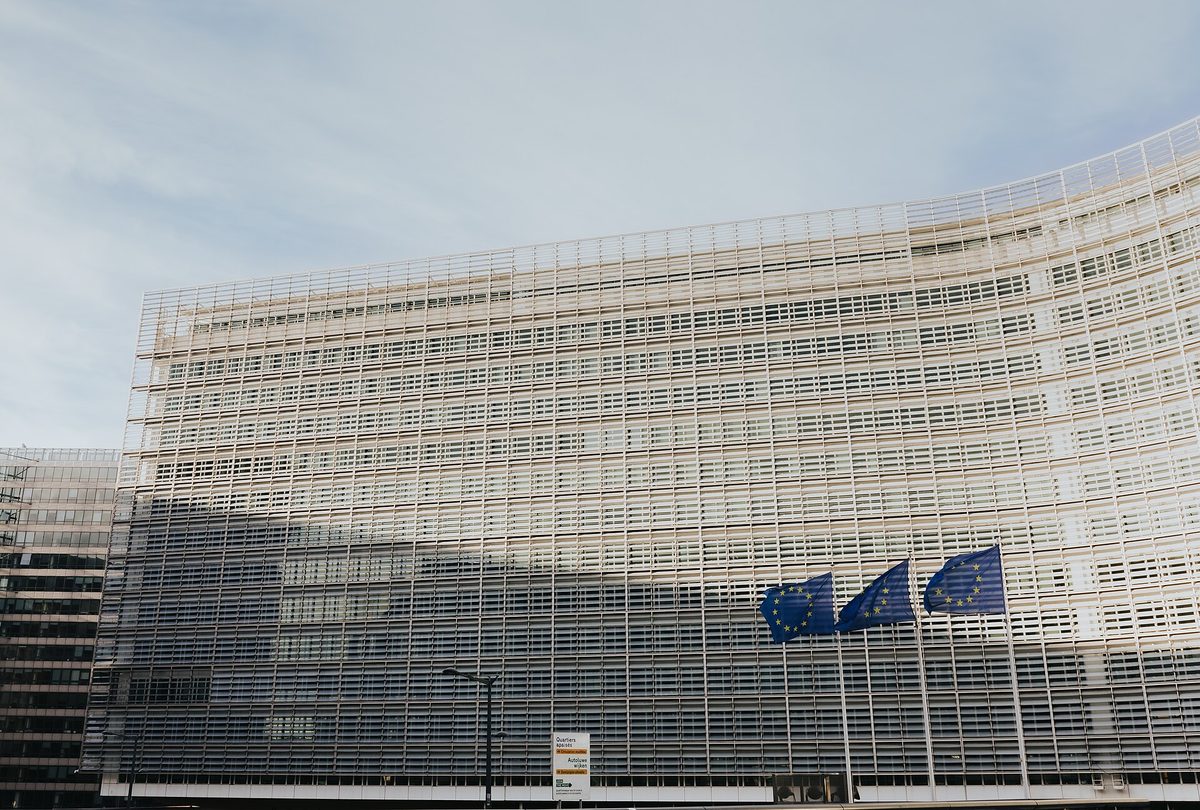
- EU flags at the Berlaymont, Brussels — Photo: Euro Pictures / CC BY 2.0 via Wikimedia Commons
- Automated border control at Marseille Provence Airport — Photo: Okki, derivative work Bonus bon / CC BY-SA 4.0 via Wikimedia Commons
- Schengen village and Moselle vineyards, Luxembourg — Photo: Dr. Kerbusch / CC BY-SA 4.0 via Wikimedia Commons
- Eurostar at St Pancras, London — Photo: FrogsLegs71 / CC BY-SA 3.0 via Wikimedia Commons
- The Colosseum in Rome, Italy — Photo: Wilfredor (CC0) via Wikimedia Commons
- Charles Bridge and Prague Castle, Czech Republic — Photo: Godot13 / CC BY-SA 4.0 via Wikimedia Commons
- The Eiffel Tower in Paris, France — Photo: Pierre Blaché from Paris, France (CC0) via Wikimedia Commons
- White houses and blue domes in Oia, Santorini, Greece — Photo: Giles Laurent / CC BY-SA 4.0 via Wikimedia Commons
- Edinburgh Castle in Scotland — Photo: James Moore (CC0) via Wikimedia Commons
1 comment