Ireland Travel Guide: Where to Go, Costs & Tips (2026)
The first time I drove out of Dublin and the hedgerows closed in around a road barely wider than my rental car, a farmer waved me down to let forty sheep cross. I sat there, engine off, rain misting the windscreen, and thought: this is exactly why people fall for this place. Ireland runs on a slower, warmer clock than the rest of Europe, and once you sync up with it, you don’t want to leave.
This Ireland travel guide is the one I wish someone had handed me before my first trip: where to go, when to come, how long to stay, what it costs, and the honest trade-offs nobody mentions until you’re standing in the rain wondering why you didn’t pack a better jacket. I’ve put it together from several trips across the island, cross-checked against official sources, so you can plan with confidence rather than guesswork.
Is Ireland worth visiting? The short answer
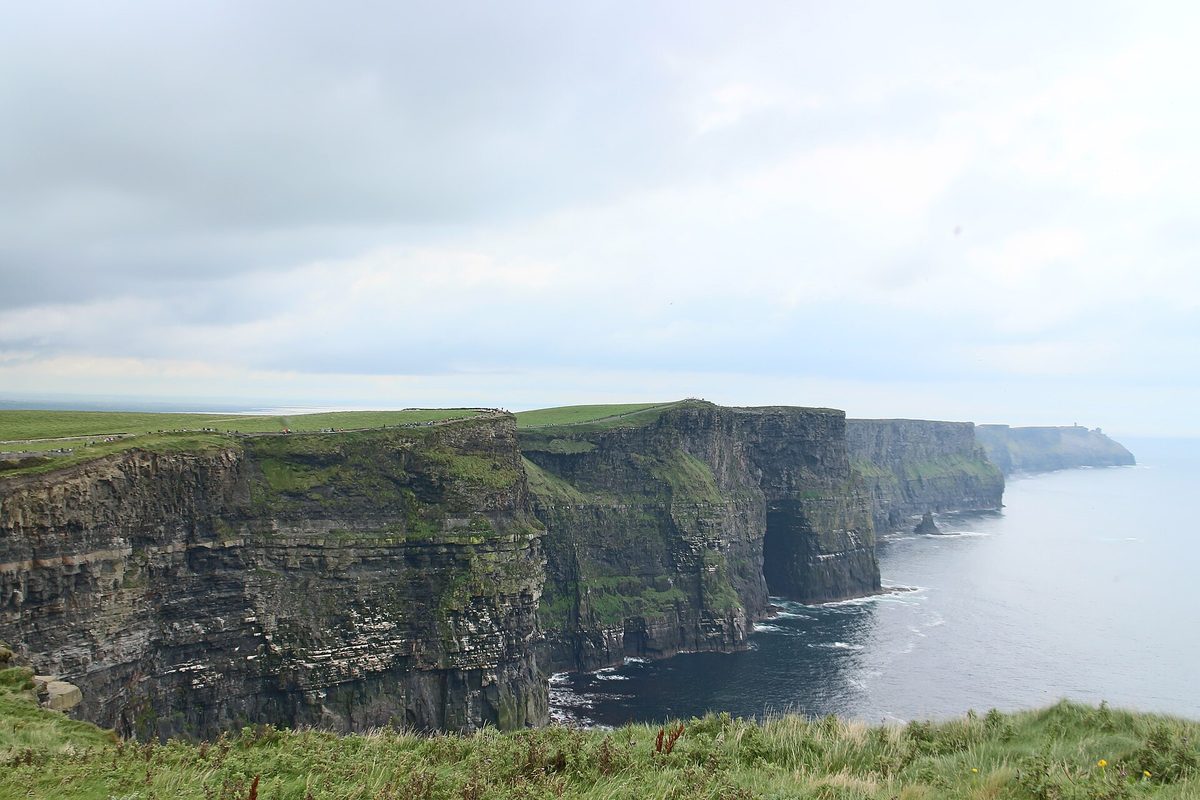
Yes — Ireland is absolutely worth visiting. In about a week you can stand atop the 700-foot Cliffs of Moher, hear live trad music in a Galway pub, drive the Ring of Kerry, and tour Dublin’s Book of Kells. It’s safe, English-speaking, easy to reach, and the scenery and welcome are the real deal. Budget on roughly €150–€200 a day per person.
I’ll be candid where it counts. The weather is genuinely unpredictable, prices in Dublin have climbed, and the famous coastal roads demand patience. But none of that has ever made me regret a trip. If anything, the soft grey days and the four-pints-deep conversations with strangers are part of what makes Ireland feel different from anywhere else I’ve travelled. For where it sits among the best places to visit in Europe, it punches well above a country of five million people.
Ireland at a glance
Here’s the quick-reference version before we get into detail. If you only read one part of this guide, make it this table.
| Planning factor | What to know |
|---|---|
| Best time to visit | May–September for weather and long days; April, late September and October for fewer crowds and lower prices |
| How long to stay | 7 days for the highlights; 10–14 to do it justice |
| Currency | Euro (€) in the Republic; pound sterling (£) in Northern Ireland |
| Language | English everywhere; Irish (Gaeilge) in Gaeltacht regions |
| Entry (US/UK/EU) | Passport only, 90 days visa-free — no ETIAS (Ireland isn’t in the Schengen Area) |
| Getting around | Rent a car for the countryside; trains and buses link the cities |
| Driving | On the left; roads are narrow and twisty outside motorways |
| Daily budget | ~€90 budget, ~€170 mid-range, €300+ luxury, per person |
| Don’t miss | Cliffs of Moher, Ring of Kerry, Dublin, Galway, Dingle, the Wild Atlantic Way |
| Plugs | Type G (three-pin), 230V — same as the UK |
Last updated: June 2026. Prices and opening hours change — I’ve hedged them as “around” and you should confirm the latest before you book.
Why visit Ireland (and what makes it different)
People come to Ireland for the scenery and stay for the people. The landscapes do the recruiting — emerald farmland stitched with stone walls, Atlantic cliffs that fall straight into the sea, mountains the colour of bruised heather — but it’s the conversations that book your return flight. Strangers talk to you here. In a pub, at a bus stop, on a mountain path, someone will ask where you’re from and genuinely want the answer.
It’s also remarkably compact. Ireland is roughly the size of the US state of Indiana, so you’re never more than a few hours from the next county. That means you can pack mountains, beaches, medieval castles and a buzzing capital into a single week without spending your whole holiday in transit. Compare that with planning a sprawling multi-country Europe itinerary and the appeal of a single, walkable island becomes obvious.
And the history is everywhere, casually. You’ll pass 5,000-year-old passage tombs older than the pyramids, ruined abbeys in the middle of cow fields, and pubs that have been pulling pints since before the United States existed. Nothing is roped off and sanitised the way it can feel elsewhere. You can put your hand on a Norman castle wall and have the whole place to yourself.
Best time to visit Ireland
I’ll save you the suspense: there is no month with guaranteed good weather, so plan around daylight and crowds instead. The single most useful thing to understand about Ireland is that the weather changes hour to hour, not season to season. You can get all four seasons before lunch. Pack for it and you’ll be fine; fight it and you’ll be miserable.
That said, the months genuinely do differ, and choosing well makes a real difference. Here’s how I think about it, and there’s a dedicated guide to the best time to visit Ireland if you want the month-by-month deep dive.
| Season | Months | What to expect |
|---|---|---|
| Peak | June–early September | Warmest (highs around 18–20°C / 64–68°F), longest days (light until 22:30 in June), busiest, priciest. Book everything ahead. |
| Shoulder | Mid-April–May, late Sept–October | My favourite window. Mild, fewer crowds, lower prices, gardens in bloom or autumn colour. Higher odds of rain. |
| Low | November–March | Cheapest and emptiest, cosy pub weather, short days (dark by 17:00), many rural sights closed or weekend-only. |
If you pinned me down, I’d send a first-timer in late May or early June. Statistically that’s Ireland’s driest, most settled stretch, with the longest days of the year and the summer rush not yet at full tilt. September is the close runner-up: warm sea, golden light, calmer roads and softer prices. I avoid late July and August unless I’ve booked accommodation months out, because the popular spots — Killarney, Dingle, Galway — fill up and the Wild Atlantic Way turns into a slow convoy.
One more thing: Ireland’s marquee events shift the calculus. St Patrick’s weekend in mid-March turns Dublin into a sea of green (fun, but full), and the autumn festival season — oysters in Galway, jazz in Cork, matchmaking in Lisdoonvarna — gives the shoulder months real character. If your dates are flexible across the continent, my broader take on the best time to visit Europe can help you line Ireland up with a wider trip.
How many days do you need in Ireland?
The honest answer is “more than you’ve booked.” Ireland rewards slowing down — the magic is in the unplanned pub session and the detour down an unmarked lane, not in ticking off ten counties. That said, here’s how the common trip lengths actually play out, and a full Ireland itinerary breaks each of these down day by day.
5 days: Dublin plus one region
Enough for the capital and a single escape. I’d give Dublin two nights, then drive west to Galway and the Cliffs of Moher, or south to Killarney and the Ring of Kerry. Don’t try to do both — you’ll spend the trip in the car. Five days is a great long weekend-plus, not a tour of the island.
7 days: the classic first loop
A week is the sweet spot for first-timers and the length most people actually have. A proven route: Dublin (2 nights) → Galway and the Cliffs of Moher (2) → Dingle or Killarney and the Ring of Kerry (2) → back to Dublin. You’ll see the greatest hits without sprinting, and still have an evening or two for nothing-in-particular, which is where Ireland shines.
10 days: highlights without the rush
Ten days is, to me, the ideal first trip. Same spine as the week, but you add the Dingle Peninsula and the Ring of Kerry instead of choosing, slot in Kilkenny or the Rock of Cashel on the way south, and breathe. This is the itinerary I recommend to friends who ask.
2 weeks: the whole island
Two weeks lets you add the north — Belfast, the Giant’s Causeway and the Causeway Coast — plus wilder corners like Donegal’s Slieve League or the Beara Peninsula. If you love a European road trip, a fortnight on the Wild Atlantic Way is one of the best in Europe, full stop.
Where to go in Ireland: a region-by-region guide
Rather than hand you a numbered list of thirty attractions, let me walk you through the island the way I’d actually plan a trip — by region, so you can see what clusters together and build a sensible route. If you want a ranked shortlist to cross-reference, my rundown of the best places to visit in Ireland goes deeper on each spot.
Dublin and the east
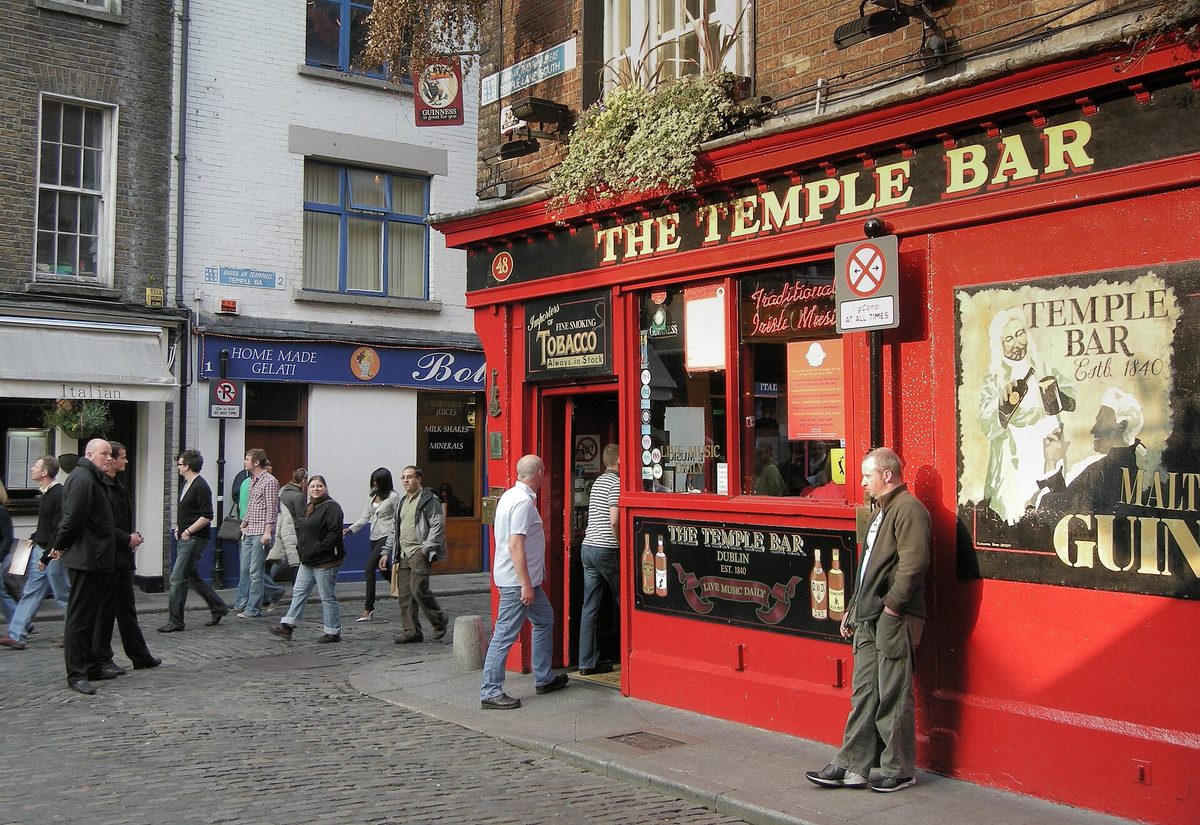
Most trips start in Dublin, and it’s worth two or three nights rather than the single rushed day many people give it. The capital is small enough to walk and packs a lot in: Trinity College and the 1,200-year-old Book of Kells, the sobering and superb Kilmainham Gaol (book ahead — it sells out), the Guinness Storehouse with its rooftop Gravity Bar, the EPIC emigration museum (consistently voted Europe’s best), and the cobbled, slightly chaotic Temple Bar district. A full list lives in my guide to things to do in Dublin.
My honest take: do the Guinness Storehouse for the view and the pour-your-own-pint, but drink your actual pints in a proper local — Kehoe’s, The Long Hall, or Mulligan’s — not in the tourist crush of Temple Bar, where a pint can run north of €8. Give Kilmainham Gaol and a wander through the Georgian streets around Merrion Square your real time. Dublin makes a brilliant European city break in its own right if you’re short on time.
Within day-trip range: the prehistoric passage tomb of Newgrange in the Boyne Valley (older than Stonehenge and the pyramids), the cliffside gardens of Powerscourt and the monastic ruins of Glendalough in the Wicklow Mountains, and the medieval city of Kilkenny with its castle. This whole eastern swathe is branded “Ireland’s Ancient East,” and it’s where the island’s history is thickest on the ground.
The southwest: Cork, Kerry and the Ring
If you only see one region beyond Dublin, make it the southwest. This is the Ireland of the postcards — and it earns it.
Cork, the “rebel city,” is Ireland’s laid-back second city, worth a night for the English Market (a covered food hall going since 1788) and as a base for kissing the Blarney Stone up at Blarney Castle, if you’re so inclined. Nearby Kinsale is a gorgeous, gourmet harbour town and the official southern start of the Wild Atlantic Way.
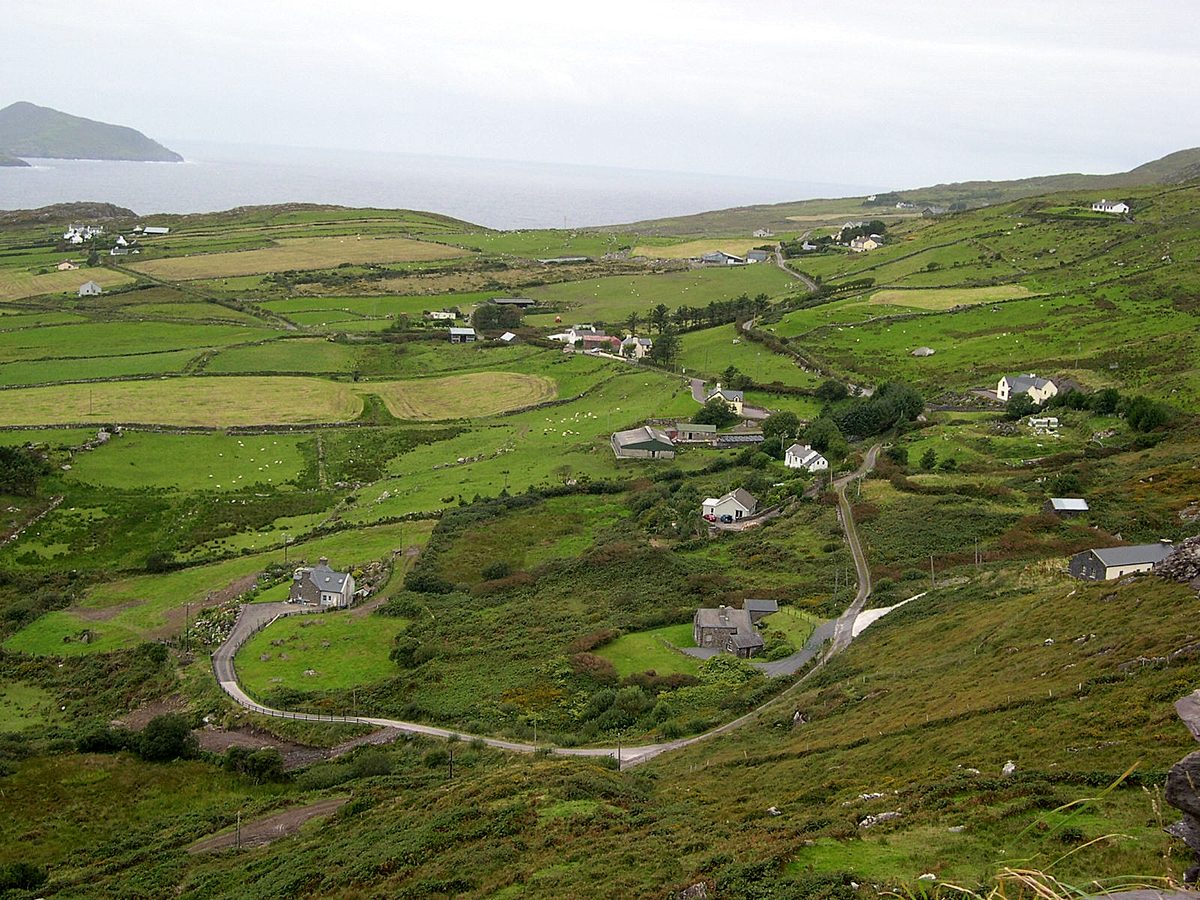
West of Cork lies County Kerry, and this is where the scenery goes up a gear. Killarney is the tourist hub — a cheerful, slightly twee town wrapped around a glorious national park of lakes, waterfalls and the country’s highest mountains. The famous Ring of Kerry is a 179km loop around the Iveragh Peninsula past Rossbeigh beach, the Skellig viewpoints and Killarney’s lakes; it’s spectacular and, in summer, busy. My full Ring of Kerry guide covers the best stops and how to dodge the tour-bus convoy (drive it anti-clockwise, start early).
But here’s my contrarian tip: the smaller Dingle Peninsula just to the north is, for my money, even better. The Slea Head Drive is a tighter, wilder, less-trafficked loop past beehive huts, surf beaches and the westernmost point in Europe, ending in Dingle town — a rainbow-coloured fishing port with more pubs than sense and live trad most nights. If you have to choose, I choose Dingle.
The west: Galway, Clare and the Cliffs of Moher
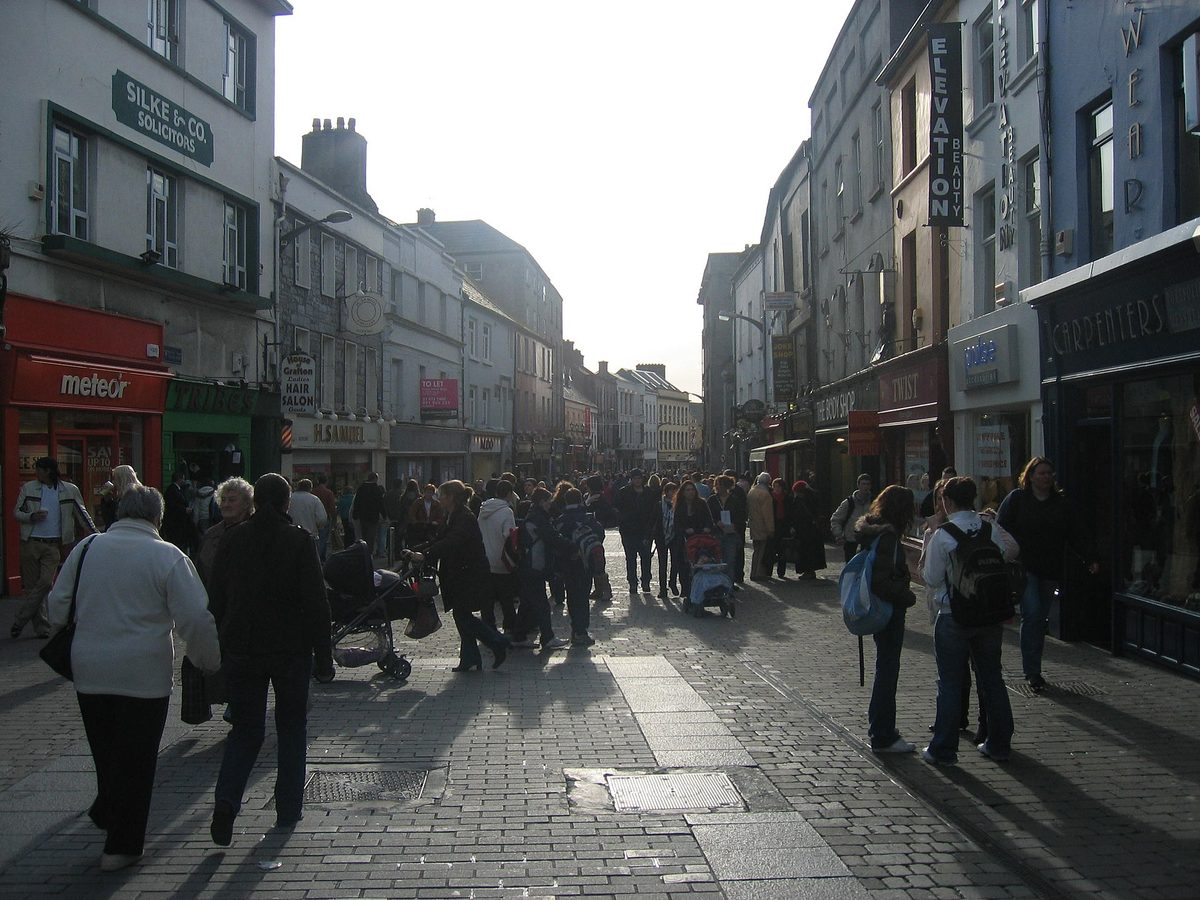
Galway is my favourite city in Ireland, and I’ll defend that to anyone. It’s a small, salt-sprayed university town where the streets are full of buskers, the pubs spill out onto the pavement, and you can be on a wild beach or in the Connemara mountains within half an hour. The Latin Quarter’s cobbled lanes, the oyster bars, and Tig Cóilí for trad — Galway does atmosphere better than cities ten times its size. It’s also the gateway to the west, and my Galway travel guide covers where to eat, drink and stay.
From Galway, two unmissable day trips. North and west is Connemara: a roadless-feeling wilderness of bog, lakes and the Twelve Bens mountains, with Kylemore Abbey mirrored in its lake and the Gaelic-speaking village of Clifden at its heart. Offshore are the Aran Islands — Inis Mór, reachable by a 40-minute ferry, where you rent a bike and pedal to the vertigo-inducing cliff fort of Dún Aonghasa, an Iron Age semicircle perched on a 100-metre drop.
South, in County Clare, sits Ireland’s single most visited natural attraction: the Cliffs of Moher. They rise 214 metres straight out of the Atlantic and run for 14km, with O’Brien’s Tower at the high point. Yes, they’re busy; go at opening or in the last two hours of light and they’re transcendent. My dedicated Cliffs of Moher guide has parking, timing and the quieter clifftop walk to Hag’s Head. Right beside the cliffs is the Burren, a lunar limestone plateau where Mediterranean and Arctic wildflowers grow side by side — utterly unlike anywhere else in Ireland.
The Dingle and the Wild Atlantic Way
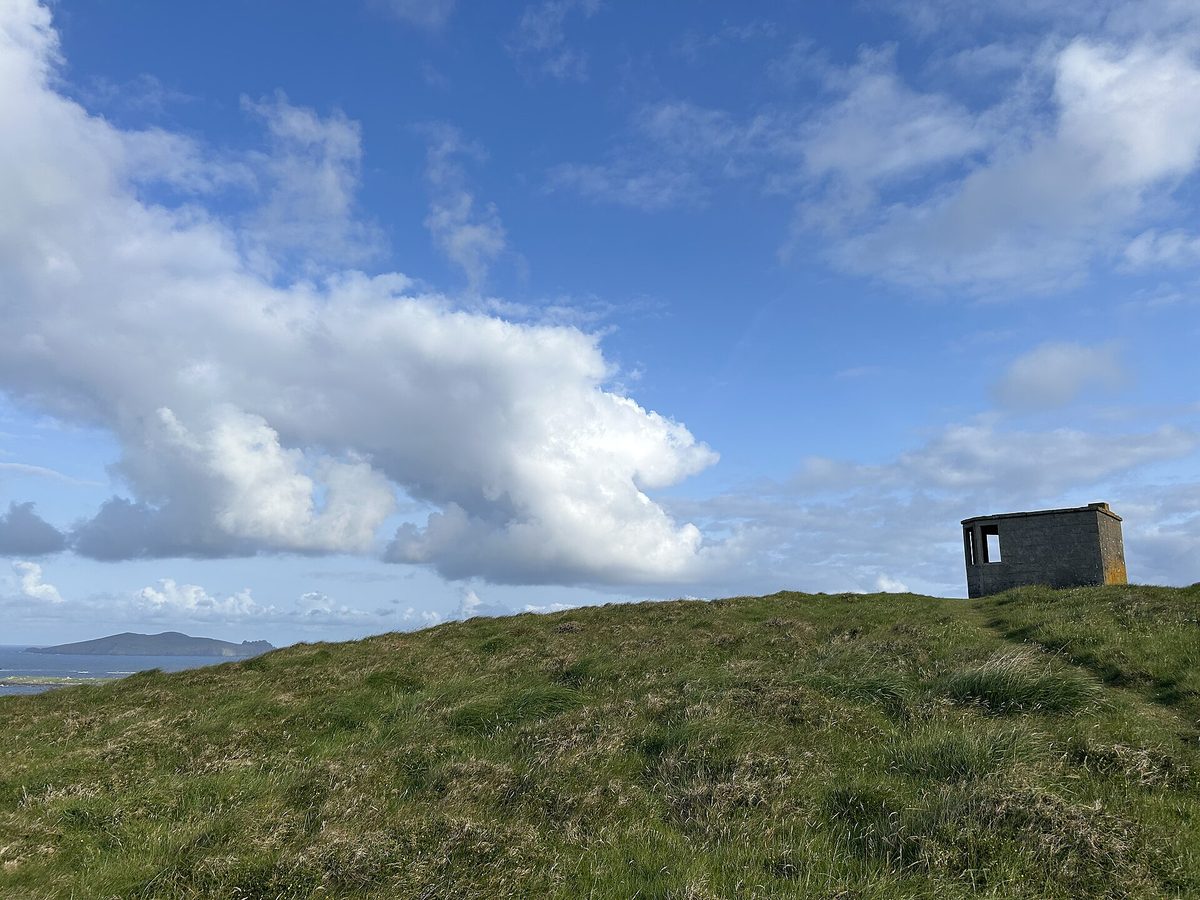
The thread connecting much of the above is the Wild Atlantic Way, the world’s longest defined coastal touring route: 2,500km from Kinsale in County Cork up to Malin Head in County Donegal, through nine counties, marked by a blue wave logo. You won’t drive the whole thing on a normal holiday — and you shouldn’t try. Pick a stretch. The Cork-to-Galway section takes in Kerry, Dingle, the Cliffs and the Burren; the northern reaches reward those with two weeks.
Driving it is the obvious move, and it’s one of the great drives in Europe — but mind the pace. Average speeds on these coastal roads are slow, the views are constant distractions, and you’ll want far more stops than you planned. I budget roughly half the distance per day I would on a motorway.
The northwest: Mayo, Sligo and Donegal
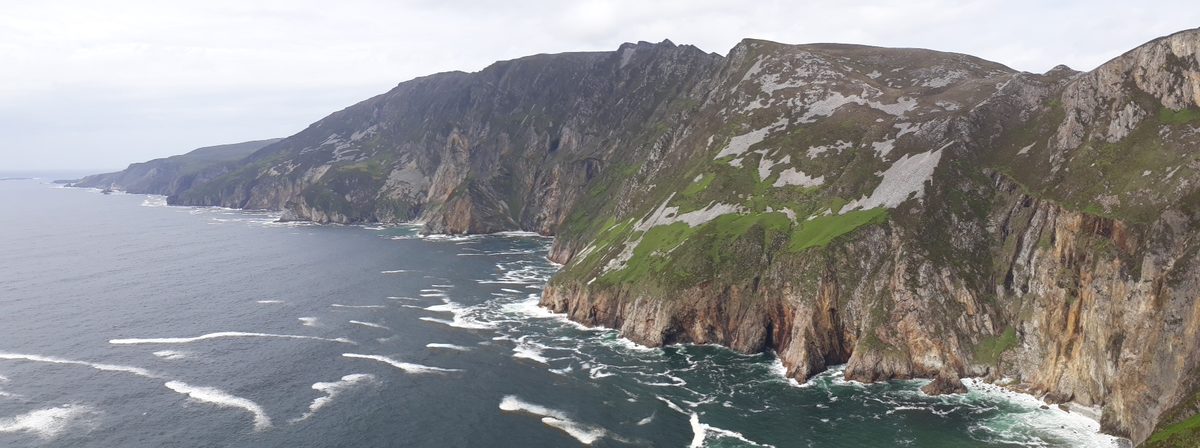
This is the Ireland fewer visitors reach, and it’s all the better for it. County Mayo has Achill Island (Ireland’s largest, linked by bridge, with the staggering Keem Bay beach) and the pilgrimage mountain of Croagh Patrick. Sligo is Yeats country — flat-topped Benbulben presiding over surf beaches at Strandhill and Mullaghmore. And remote Donegal, tucked up in the far northwest, hides the Slieve League cliffs, which are nearly three times the height of the Cliffs of Moher and a fraction as crowded. If you crave wild, empty and dramatic, this is your corner.
Northern Ireland
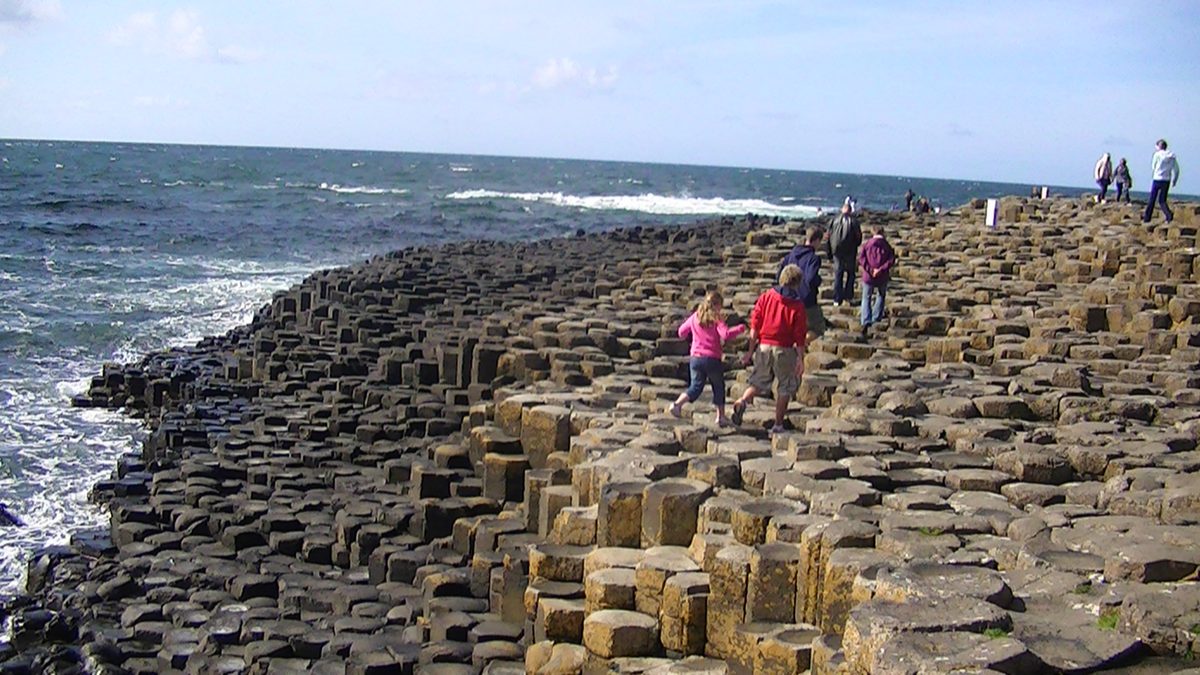
It’s a separate country — part of the United Kingdom, with pounds sterling instead of euros — but there’s no hard border, and adding it is easy. Belfast has reinvented itself around the superb Titanic Belfast museum and black-cab political-mural tours, while the Causeway Coast delivers the basalt columns of the Giant’s Causeway (a UNESCO World Heritage Site), the knee-wobbling Carrick-a-Rede rope bridge, and the beech-lined Dark Hedges of Game of Thrones fame. I cover the practicalities of crossing the border and what changes in my UK travel guide.
Getting around Ireland
This is the decision that shapes your whole trip, so let’s be clear-eyed about it. Do you need a car in Ireland? For the cities, no. For the countryside, almost certainly yes.
Dublin, Cork, Galway, Limerick and Belfast are all better explored on foot, and they’re linked by fast, comfortable trains and buses. But the things that make Ireland Ireland — the Ring of Kerry, Dingle, Connemara, the lonely Donegal cliffs — are mostly miles from the nearest station, served by infrequent rural buses if at all. If your trip is city-to-city, skip the car and save the stress. If it includes the Wild Atlantic Way, rent one.
Driving in Ireland: what to know
The big one: you drive on the left, and the driver sits on the right. If you’ve never done it, you adapt within a day, but take a quiet practice loop before you tackle anything serious, and don’t make Dublin city your first attempt. A few hard-won specifics:
- Manual is the default. Automatics exist but cost noticeably more and must be booked well ahead — worth it if you’d be juggling a stick shift, the wrong-side gears and left-hand driving all at once.
- Roads are narrow. Outside the motorways (the M-roads), expect hedge-lined lanes with no shoulder, blind bends, and yes, the occasional flock of sheep. The signature “regional road” is barely wider than your car.
- Insurance and age. Most agencies won’t rent to drivers under 25 or over about 74, and your home licence is fine for stays under a year. Check the Collision Damage Waiver carefully — Irish rental excess can be steep.
- Tolls and fuel. The M50 around Dublin is barrier-free (you pay online by 20:00 the next day — easy to forget). Fuel is sold in litres and pricey by US standards.
Trains, buses and the Leap Card
If you’re going car-free, Ireland’s public transport is better than its reputation. Irish Rail runs fast intercity trains from Dublin’s two stations — Heuston (for Cork, Galway, Limerick) and Connolly (for Belfast and Sligo). Bus Éireann and private operators like Citylink and GoBus fill in everywhere the trains don’t, and they’re cheap. For city transit, grab a Leap Card; visitors can buy a Leap Visitor Card giving unlimited Dublin bus, tram (Luas), DART and commuter rail for around €16 over three days.
One realistic middle path I often recommend: base yourself in the cities by train, then take a guided day tour for the hard-to-reach scenery (Cliffs of Moher from Galway, Ring of Kerry from Killarney). You give up flexibility but skip the white-knuckle driving. For the bigger picture on moving around the continent, see my guide to getting around Europe; note that Ireland isn’t on the continental rail network, so a Eurail pass and the wider world of train travel in Europe don’t apply here.
Where to stay in Ireland
Accommodation is where Ireland punches you in the wallet, especially in Dublin, so book early. The range, high to low:
- Castle and manor hotels — a genuine Irish bucket-list splurge. Ashford Castle, Dromoland, Adare Manor: think €400–€1,000+ a night, but a real once-in-a-lifetime stay.
- B&Bs and guesthouses — my favourite way to do Ireland. Family-run, around €90–€150 for a double with a vast cooked breakfast and, more valuably, a host who’ll tell you where the locals actually eat. They’re the backbone of the countryside.
- City hotels — mid-range runs €120–€220 in Dublin, less elsewhere. Dublin rates spike hard around events and in summer; if a price looks insane, check your dates against a concert or match.
- Hostels — excellent and sociable, €20–€45 for a dorm bed, more for a private room. Ireland’s hostel scene is friendly and well suited to anyone backpacking around Europe.
For how Irish prices and styles compare with the rest of the continent, I dig into the options in my guide to European accommodation.
Irish food and drink: what to eat (and where)
Ireland has quietly become a very good place to eat. The old jokes about boiled everything are decades out of date — this is a country with phenomenal dairy, beef, lamb and seafood, and a generation of chefs doing serious things with it. Come hungry, and don’t skip the pub grub, which is where a lot of the best, honest cooking still happens.
Dishes I tell everyone to try at least once:
- Irish stew and its richer cousin beef and Guinness stew — lamb or beef slow-cooked with potatoes, carrots and onions. Cold-day perfection.
- Seafood chowder with brown soda bread — on the west coast this is non-negotiable. Creamy, smoky, packed with fresh fish; the bread is dense, malty and slathered with Irish butter.
- A full Irish breakfast — eggs, rashers, sausages, black and white pudding, grilled tomato, beans and toast. Do it once; it’ll see you through to dinner.
- Boxty and coddle — boxty is a potato pancake; coddle is a humble Dublin sausage-and-bacon stew. Proper comfort food.
- Galway oysters — if you’re on the west coast in autumn, the native oysters are world class.
And then there’s the pub, which in Ireland is less a place to drink than the country’s living room. A good one has a fire, no television blaring, and — if you’re lucky — a trad session: a few musicians with a fiddle, a flute and a bodhrán drum playing in the corner, unamplified, for the love of it. Pull up a stool and just listen. Don’t clap over the tunes; do buy the musicians a drink.
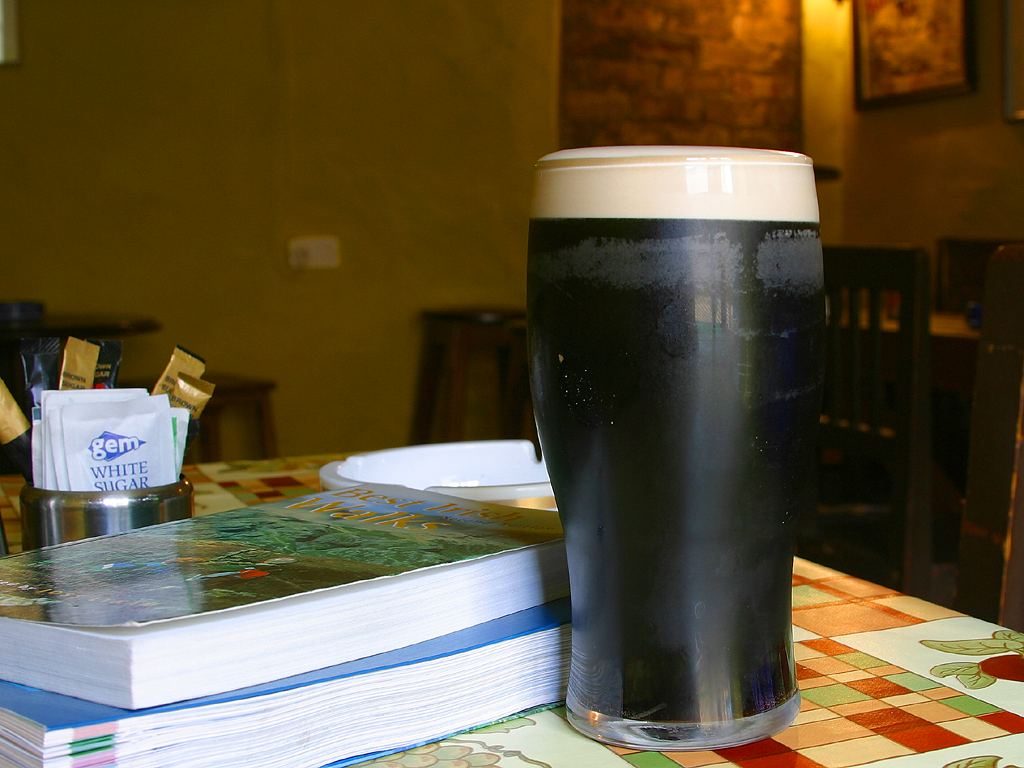
The drink itself: a properly poured pint of Guinness takes about two minutes (the famous “119.5-second pour,” settled in two pulls), and yes, it genuinely tastes better here. Beyond the black stuff, Irish whiskey is having a renaissance — tour Jameson in Dublin or Midleton in Cork — and the craft-beer and gin scenes are thriving. Pub etiquette tip that’ll endear you to locals: learn the “round” system, where everyone takes turns buying for the group, and don’t be the one who slips out before your round.
How much does a trip to Ireland cost?
Let’s talk money honestly, because Ireland — Dublin especially — is not a budget destination anymore. As a rough per-person daily benchmark for 2026, excluding flights:
| Style | Per day (per person) | What that looks like |
|---|---|---|
| Budget | ~€80–€100 | Hostels, self-catering and pub lunches, public transport and day tours, a couple of pints |
| Mid-range | ~€150–€200 | B&Bs and 3-star hotels, a rental car, paid attractions, a sit-down dinner most nights |
| Luxury | €300+ | Castle hotels, fine dining, private guides and the splurges |
A typical mid-range traveller spends somewhere around €170–€200 a day. For a sense of individual costs: a pint runs about €6–€7 (more in Dublin), a pub main €15–€22, a café breakfast €10–€16, the Cliffs of Moher around €12, and a Guinness Storehouse ticket about €30. Rental cars start near €40 a day in shoulder season but climb fast in summer.
Where to save without sacrificing much: travel in shoulder season, stay in B&Bs (that huge breakfast is built-in value), picnic from the brilliant local food halls and SuperValu supermarkets, and look out for Free Wednesdays, when many Office of Public Works heritage sites waive admission on the first Wednesday of the month. My wider playbook for visiting Europe on a budget applies cleanly here, and there’s more in my general Europe travel tips.
Entry requirements and practical information
Here’s the piece that trips people up, so read carefully: Ireland is not in the Schengen Area, and it will not require ETIAS. This is genuinely good news. While most of continental Europe is rolling out the new ETIAS travel authorisation (expected to go live in late 2026 and become mandatory around April 2027), Ireland sits outside that system entirely. US, UK, Canadian, Australian and EU citizens can enter Ireland with just a valid passport and stay up to 90 days, visa-free, for tourism.
A useful planning quirk falls out of this: your 90 days in Ireland are separate from your 90 days in the Schengen zone. If you’ve used up your Schengen allowance elsewhere in Europe, Ireland gives you a fresh clock — and vice versa. Ireland also shares a Common Travel Area with the UK, so there’s no passport control crossing into Northern Ireland. As always with entry rules, confirm the current position on the official Irish Immigration Service site before you fly, since these things do change.
The rest of the practical checklist:
- Money: euros (€) in the Republic, pounds (£) in Northern Ireland. Cards are accepted nearly everywhere, but carry some cash for rural pubs, small shops and honesty-box car parks.
- Plugs: Type G three-pin sockets, 230V — identical to the UK. Bring an adapter.
- Language: English is universal. Irish (Gaeilge) is the first official language and you’ll see it on every road sign; in the Gaeltacht regions of the west you’ll actually hear it spoken.
- Safety: Ireland is one of the safer countries you’ll travel in. Normal city common sense covers it; violent crime against tourists is rare. Solo travellers, in particular, tend to feel at ease here, which is part of why it’s such a popular spot for solo travel.
- Tipping: Not the high-pressure ritual it is in the US. Round up or leave about 10–15% for good restaurant service; tipping isn’t expected at the bar in pubs.
- Connectivity: An eSIM or any EU SIM works well; coverage is good in towns, patchy in the far west. Free Wi-Fi is standard in cafés and accommodation.
- Health: No special vaccinations. Tap water is safe to drink. Pharmacies (look for “chemist”) are everywhere for minor needs.
Ireland by traveller type
Who you’re travelling with changes the trip more than the season does. A few honest pointers:
First-timers
Do the classic loop — Dublin, Galway and the Cliffs, Kerry or Dingle — and resist cramming. You’ll leave wanting to come back, which is the right way to leave Ireland. Lean on a structured trip-planning framework if it’s also your first time navigating Europe generally.
Couples
This is a romantic country: a B&B with a turf fire, a candlelit seafood dinner in Kinsale, a misty morning at Glendalough. Splurge one night on a castle hotel. Dingle and Kenmare are especially lovely for two.
Families
Ireland is wonderfully kid-friendly — castles to clamber on, boat trips, farm visits, beaches, and pubs that genuinely welcome children until early evening. Distances are short enough that car days stay sane. Pack rain gear and embrace the puddles.
Solo travellers and budget trips
Few places are easier to travel alone. The pub culture means you’re never truly on your own, hostels are sociable, and the public-transport-plus-day-tours approach keeps costs down. It’s a natural fit if you’re backpacking through Europe on a shoestring.
Common Ireland mistakes (and how to avoid them)
After enough trips and enough conversations with first-timers, the same handful of avoidable mistakes come up again and again. Sidestep these and your trip is immediately better.
- Trying to see the whole island in a week. The single most common error. Ireland looks small on a map, but its roads are slow. Pick two or three regions and go deep. You can’t “do” Ireland in seven days, and the attempt ruins the seven days you have.
- Never leaving Dublin. The opposite mistake. Dublin is great, but it is not Ireland — the country’s soul is in the west and the small towns. Give the capital two nights, then go.
- Underestimating the weather. “It can’t be that bad.” It can, and it’ll be sideways. Pack a proper waterproof jacket, layers and waterproof shoes, and plan some indoor options. Then, when the sun does break through, it feels like a gift.
- Booking a manual car you can’t drive. Left-hand driving plus a stick shift plus narrow roads is a lot at once. If you’re unsure, pay extra for an automatic and book it early.
- Rushing the Wild Atlantic Way. This is a coast to savour, not a route to conquer. Halve the distance you think you can cover in a day.
- Forgetting the M50 toll. Dublin’s ring road bills electronically; pay online by 20:00 the next day or the fine finds your rental company — and you.
The meta-lesson under all of these is the same: slow down. Ireland is not a country you tick off. It’s one you sink into. The travellers who love it most are the ones who left room for the unplanned — the detour to a beach they spotted from the road, the extra night in a town they only meant to pass through, the trad session that turned into a very late evening.
If Ireland’s wild Atlantic edges hook you the way they hooked me, you’ll find kindred landscapes across the north Atlantic — the same raw, weather-lashed beauty runs through my Iceland travel guide, and Ireland’s underrated coastline holds its own among the best beaches in Europe on a sunny day. And if you’re stitching Ireland into a longer continental loop, my guides to France, Portugal and Italy are good next steps.
Ireland travel guide: frequently asked questions
Do you need a visa or ETIAS to visit Ireland?
No. Ireland is not part of the Schengen Area, so the upcoming ETIAS authorisation does not apply. US, UK, Canadian, Australian and EU citizens can enter with just a valid passport and stay up to 90 days visa-free for tourism. Your Irish 90 days are also separate from any Schengen days you’ve used elsewhere in Europe. Always confirm current rules with the Irish Immigration Service before travelling.
What is the best month to visit Ireland?
Late May and early June are the sweet spot — Ireland’s driest, most settled weather, the longest daylight of the year, and the summer crowds not yet at full strength. September is a close second for warm seas, golden light and lower prices. July and August are warmest but busiest, so book accommodation well ahead if those are your dates.
Is Ireland expensive to visit?
It’s not cheap, particularly Dublin. Budget around €80–€100 per person per day for hostels and self-catering, €150–€200 for mid-range B&Bs and a rental car, and €300+ for luxury. You can trim costs by travelling in shoulder season, staying in B&Bs with breakfast included, and using Free Wednesdays at heritage sites. A pint runs about €6–€7, more in tourist pubs.
Do I need a car to travel around Ireland?
For the cities — Dublin, Cork, Galway, Belfast — no; trains and buses are fast and cheap. For the countryside and the coastal scenery like the Ring of Kerry, Dingle and Connemara, a car is almost essential, as rural public transport is sparse. Remember you’ll be driving on the left, and automatic cars cost more and must be booked ahead.
What currency does Ireland use?
The Republic of Ireland uses the euro (€). Northern Ireland, which is part of the United Kingdom, uses pound sterling (£). If your trip crosses the (invisible) border, you’ll want both. Cards are widely accepted, but carry some cash for rural pubs, small shops and car parks.
Is it better to fly into Dublin or Shannon?
Dublin (DUB) has by far the most flights and the best connections, and suits trips that start in the east. Shannon (SNN) in the west is smaller but brilliantly placed if you’re focusing on Kerry, Clare and Galway — you skip the cross-country drive entirely. Cork (ORK) is a third option for the southwest. Open-jaw flights (into one, out of the other) can save real driving time.
Can you visit Ireland and Northern Ireland in one trip?
Easily. There’s no passport control between the Republic and Northern Ireland thanks to the Common Travel Area, and you can drive across without stopping. The main things that change are the currency (euros to pounds) and your phone roaming. Belfast, the Giant’s Causeway and the Causeway Coast pair naturally with a longer Irish itinerary.
Is Ireland safe for tourists?
Very. Ireland consistently ranks among the safest countries in Europe, with low violent crime and famously friendly locals. Standard city sense — watch your bag in crowds, lock the rental — is all you need. It’s an especially comfortable place to travel solo, which is a big part of its popularity.
Final thoughts
Ireland got under my skin in a way few places have, and I think it’s because the country never tries too hard. The scenery is staggering but unfussy. The history is everywhere but unguarded. And the people fold you into the warmth of a place without making a production of it. You come for the cliffs and the castles; you remember the conversations.
So here’s my parting advice, distilled: come in the shoulder season, rent a car for the west, give the cities their due and then get out among the small towns, pack for rain and stop apologising for the weather. Leave gaps in your plan for the things you can’t plan. Do that, and Ireland will give you the trip people spend the flight home already scheming to repeat. Sláinte — and safe travels.
Photo credits
All images are used under their respective licenses via Wikimedia Commons. With thanks to the photographers:
- The Cliffs of Moher rising from the Atlantic in County Clare, a must-see in any Ireland travel guide — Photo: Suicasmo / CC BY-SA 4.0, via Wikimedia Commons.
- The red facade of the Temple Bar pub in Dublin, Ireland — Photo: Gordon Leggett / CC BY-SA 4.0, via Wikimedia Commons.
- Coastal scenery along the Ring of Kerry in County Kerry, Ireland — Photo: Jay Sturner from USA / CC BY 2.0, via Wikimedia Commons.
- Colourful shopfronts and buskers in Galway’s Latin Quarter, Ireland — Photo: Sulmac at English Wikipedia (CC0), via Wikimedia Commons.
- The Slea Head Drive coastline on the Dingle Peninsula, County Kerry — Photo: Pocyun photograph / CC BY-SA 4.0, via Wikimedia Commons.
- The hexagonal basalt columns of the Giant’s Causeway in Northern Ireland — Photo: Adam Bishop / CC BY-SA 3.0, via Wikimedia Commons.
- A freshly poured pint of Guinness in a traditional Irish pub — Photo: Original uploader in German Wikipedia was Avatar (CC0), via Wikimedia Commons.
- The towering Slieve League sea cliffs in County Donegal, Ireland — Photo: Joli Rumi / CC BY-SA 4.0, via Wikimedia Commons.
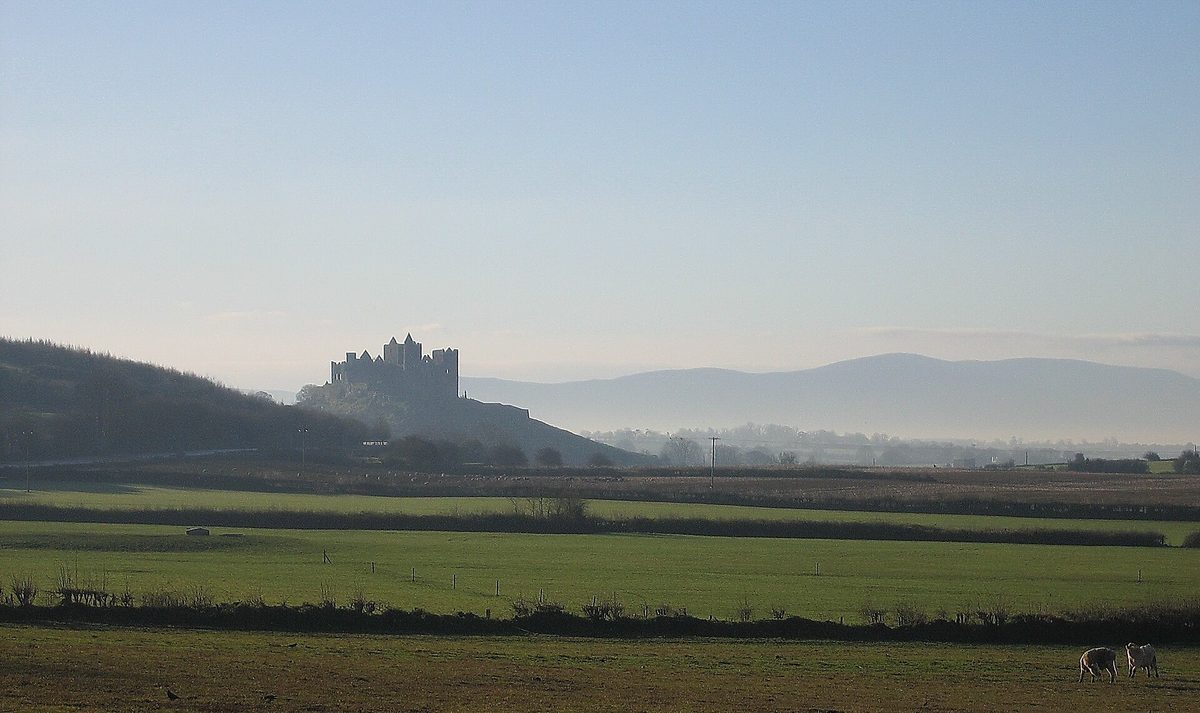
- The medieval Rock of Cashel rising above the plains of County Tipperary — Photo: Sarah777 / CC BY-SA 2.0, via Wikimedia Commons.