Do You Need Travel Insurance for Europe
Most visitors don’t legally need travel insurance for Europe: the cover is compulsory only if you’re applying for a Schengen visa. But a free European health card or a home health plan leaves big gaps, above all the cost of getting you home after a serious accident. For almost everyone, a policy with strong medical and repatriation cover is worth buying.
This guide is for anyone planning a European trip from the UK, the US or elsewhere, and it sits alongside our step-by-step guide to planning a trip to Europe. The one caveat that matters: every policy is different, so the wording you sign up to beats any general advice, including mine. Checked against official sources in November 2026.
| At a glance | |
|---|---|
| Legally required? | Only for Schengen visa applicants (medical cover of at least €30,000) |
| Who needs it most | US travellers, anyone with a medical condition, skiers and hikers, anyone with costly non-refundable bookings |
| What a health card covers | State healthcare on local terms; not repatriation, private clinics or mountain rescue |
| When to buy | The day you book flights or accommodation, so cancellation cover starts early |
| What drives the price | Age, trip length, medical history, destinations, activities and the excess you choose |
| Biggest mistake | Not declaring a pre-existing condition, which can invalidate the whole policy |
Do you legally need travel insurance for Europe?
For most readers, no. If your passport lets you visit the Schengen area without a visa, which covers UK, US, Canadian and Australian citizens among many others, nobody at the border will ask to see a policy. The insurance rule sits inside the EU’s Visa Code, and it applies to people who need a Schengen visa in the first place.
If you need a Schengen visa
The Visa Code asks visa applicants to show travel medical insurance with cover of at least €30,000. It isn’t any policy with a big number on it. The wording requires cover for medical repatriation, urgent medical attention, emergency hospital treatment and death, valid across all the member states and for the whole stay. Consulates also look at whether a claim could actually be recovered in the EU, which is why many applicants buy a policy marketed specifically as Schengen-compliant.
If that’s you, buy the policy before you book the visa appointment and print the certificate. A policy that doesn’t match your travel dates or covers only part of the Schengen area doesn’t meet the Visa Code, and fixing it after the appointment is a needless delay.
ETIAS and the new border checks
Two EU systems confuse a lot of travellers, and neither one is an insurance check.
The Entry/Exit System (EES) has been fully operational since 10 April 2026. It replaced passport stamping with an electronic record of each entry and exit, and you don’t need to do anything before travelling.
ETIAS, the travel authorisation that visa-exempt visitors will eventually need, isn’t in operation yet. The European Commission says its start date will be announced, so don’t pay any website that claims to sell one today. For the start date and the fee, rely only on the EU’s official ETIAS page at travel-europe.europa.eu. Our planned guide to the documents you need to travel to Europe covers passports and entry paperwork in full.
The UK and Ireland are different again
The UK isn’t in the EU or Schengen, and most visitors now need a UK Electronic Travel Authorisation (ETA) or a visa, though British and Irish citizens don’t. There’s no insurance requirement attached. Ireland isn’t in Schengen either and runs neither EES nor ETIAS. In both countries, as on the continent, the reason to insure is cost, not compliance.
Verdict: if you don’t need a visa, insurance is optional in law. In practice it’s the one part of the trip I’d never leave out.
So who really needs a policy?
The honest answer depends on where you’re coming from and what card or plan you already hold. Here’s how the gaps line up.
| Traveller | What you may already have | The gap a policy fills |
|---|---|---|
| UK resident | UK GHIC (or a UK EHIC), free from the NHS | Repatriation, private clinics, ski and mountain rescue, cancellation, belongings |
| EU, Norwegian, Swiss or Icelandic resident | EHIC from your health insurer | Rescue and repatriation, private care, cancellation, belongings |
| US resident on Medicare | Usually nothing abroad; some Medigap plans cover emergency care | Almost all medical costs, evacuation, cancellation |
| US resident on a private health plan | Depends entirely on the plan | Check the plan’s overseas terms; evacuation is the usual gap |
| Canadian, Australian or other visitor | Home cover rarely travels in full | Check your own government’s travel insurance advice before buying |
Travellers from the US
This is the group with the most to lose. Medicare states that it usually doesn’t cover healthcare outside the US, with only narrow exceptions, so in most cases you pay the full bill yourself. Some Medigap policies include emergency care abroad, and Part D doesn’t cover prescription drugs bought outside the US. Medicare also points out that travel insurance doesn’t always include health cover, so a cheap trip cancellation product may leave the most expensive risk untouched.
If you’re on a private or employer plan, call the insurer and ask two questions: does it pay for emergency treatment in Europe, and does it pay to fly you home? The second answer is usually the one that settles it. If you’re unsure about a seller or a policy’s wording, your state’s insurance department is the regulator to ask.
Travellers from the UK
A GHIC is free, lasts up to five years and gets you state healthcare in the EU on the same terms as local residents. It’s also explicitly not a replacement for travel insurance. The NHS says so on its own GHIC page and advises carrying both the card and a private travel policy with medical cover. One small upside: some insurers waive the excess on a medical claim if you used your GHIC or EHIC, so carry it even when you’re insured.
Travellers from the EU and EEA
An EHIC gets you treatment that’s medically necessary and can’t wait until you’re home, on the same terms as residents of the country you’re in. That’s valuable, but it leaves rescue, repatriation, private healthcare and planned treatment uncovered. If your plans include a ski week in the Alps or a long hike, the card on its own isn’t enough.
EHIC and GHIC: what they cover and what they don’t
The two cards do the same job for different people, and the same misunderstanding trips up both groups: they treat the card as insurance. It’s an entitlement to public healthcare, nothing more.
| EHIC (EU page) | UK GHIC (NHS page) | |
|---|---|---|
| Cost | Free from your health insurer | Free from the NHS |
| Gives you | Medically necessary care that can’t wait, on local terms | State healthcare on the same terms as residents |
| Private clinics | Not covered | Not covered |
| Rescue and repatriation | Not covered | Not covered, including being flown back to the UK |
| Ski or mountain rescue | Not covered | Not covered |
| Planned treatment | Not covered | Not covered |
| Replaces travel insurance? | No | No |
A few details matter on the ground. “Same terms as locals” means you pay whatever co-payment a resident pays, and in some countries that’s a meaningful share of the bill. Without the card, or where a provider won’t accept it, you may have to pay upfront and claim the money back later. Make sure you’re shown into the public system: a private clinic near a resort or a tourist centre may not take the card at all.
Watch out for copycat websites. The EU warns about rogue sites that charge for the EHIC, and the NHS card is free too. If a site asks for a fee, you’re on the wrong one.
One quirk catches out non-EU nationals living inside the EU: they can’t use their EHIC in Denmark, Iceland, Liechtenstein, Norway or Switzerland, unless they’re a refugee or the family member of an EU citizen. If that’s your situation and your route crosses into the Alps or Scandinavia, a private policy does the work the card can’t.
Verdict: carry the card and buy the policy. They aren’t alternatives.
What a good Europe policy should cover
Policies are sold on headline limits, but the useful questions are narrower. These are the sections I’d read first, in order of how badly each one can go wrong.
| Cover | Why it matters in Europe | What to check in the wording |
|---|---|---|
| Emergency medical | Private and resort clinics bill visitors directly | The limit, and whether the insurer must approve treatment first |
| Repatriation and emergency transport | No health card pays to fly you home | That it’s included, not an add-on, and covers a medical escort |
| Cancellation and curtailment | Flights, rail passes and apartments are often non-refundable | The limit against your total prepaid cost, and the listed reasons |
| Delay and missed departure | Strikes, storms and tight connections | Hours before cover starts, and how it interacts with airline compensation |
| Baggage and valuables | Pickpocketing in crowded centres and on transport | Single-item limit, valuables limit, police report deadline |
| Personal liability | Injuring someone or damaging property | Exclusions for vehicles and sports |
| Supplier failure | Airlines and tour firms do go bust | Usually excluded; package protection is a separate system |
Emergency medical cover and repatriation
This is the reason to buy a policy at all. A broken leg on a Greek island or a heart problem on a river cruise is survivable on a health card; the flight home on a stretcher, with a medical escort, is what wrecks finances. The UK government lists emergency transport and repatriation among the first things to check, and both the EU and the NHS confirm their cards don’t pay for it. Pick a policy where repatriation is part of the core cover and the insurer runs a 24-hour assistance line.
Cancellation and cutting a trip short
Cancellation cover pays out when a listed event stops you travelling, such as illness, a death in the family or jury service, depending on the policy. Set the limit at or above what you’ve prepaid and can’t get back. If you’ve booked flexible rail tickets and refundable rooms, you need less of it; if you’ve paid upfront for a villa, a cruise and a stack of advance train fares, you need more.
Delays and missed departures
Read this alongside the passenger rights you already have (more on that below). Insurance delay cover is often a small fixed payment after a set number of hours, and its real value is the “missed departure” clause that helps when a late train makes you miss a flight. Check whether it applies only to the outbound journey, or to every leg.
Baggage, phones and cash
Belongings cover tends to have a low single-item limit, so an expensive camera or laptop may be better insured under a home contents policy with a worldwide extension. Check before you pay twice.
Personal liability
Cheap to include and easy to overlook. If you knock a cyclist off a bike or flood the flat below your rental, liability cover handles the claim. Policies usually exclude anything involving a motor vehicle, which is why car hire has its own insurance (see below).
When the airline or tour operator goes bust
The UK government is blunt about it: travel insurance usually doesn’t cover the failure of an airline or a travel supplier. Protection there comes from how you book, such as an ATOL-protected package for UK travellers. Our guide on how to book a Europe trip will go into packages versus booking the pieces separately.
Verdict: medical and repatriation first, cancellation sized to your prepaid costs second. Everything else is a tiebreaker.
If my flight is delayed, does insurance or the airline pay?
Often both, for different things, and you should claim from the airline first. EU rules give passengers fixed compensation for long delays and cancellations, and that compensation is entirely separate from your travel insurance. It covers flights departing from the EU on any airline, and flights arriving in the EU from outside when an EU airline operates them.
| Flight distance | Compensation for a 3-hour-plus arrival delay or a cancellation |
|---|---|
| 1,500 km or less | €250 |
| 1,500–3,500 km, and flights within the EU over 1,500 km | €400 |
| Over 3,500 km (outside the EU) | €600 for a cancellation or an arrival delay of 4 hours or more; €300 for a delay of 3 to 4 hours |
There are limits. Airlines don’t owe compensation for unavoidable extraordinary circumstances, and a cancellation notified at least 14 days before departure can rule it out too. The EU’s Your Europe pages set out the full conditions, and they’re worth reading before you accept a voucher at the desk.
Trains have their own rules. On EU rail journeys, delay compensation is 25 per cent of the ticket price for a delay of one to two hours and 50 per cent for two hours or more. A rail staff strike doesn’t count as an extraordinary circumstance. Missed connections across separate rail tickets are a weak spot, though: the protection there comes from voluntary operator schemes rather than the law, which is a good reason to make sure your policy’s missed departure section covers trains as well as planes. If you’re stringing several countries together by rail, our Interrail route ideas show where tight changes tend to happen.

For the flights themselves, our guide to finding cheap flights to Europe explains how fare types affect refunds. A cheap non-refundable fare and a good cancellation policy are a sensible pair; a flexible fare and a bare-bones medical policy can work just as well.
Activities and exclusions that catch travellers out
Most claims that fail don’t fail on the small print about luggage. They fail because the traveller was doing something the policy never covered, or didn’t mention something the insurer would have wanted to know.
| Activity or situation | Usually in a standard policy? | What to do |
|---|---|---|
| Skiing and snowboarding | No | Buy winter sports cover; check off-piste terms |
| Bungee jumping, skydiving, jet skiing | No | Add an activities pack or buy specialist cover |
| Riding a moped or quad bike | Usually not | Check the licence and helmet conditions, or skip it |
| A cruise | Needs additional cover | Add cruise cover, including missed port departures |
| Pre-existing medical conditions | Only if declared | Declare everything, even if it feels minor |
| Alcohol or drug-related incidents | Usually excluded | Assume you’re on your own |
| Areas your government advises against | Often excluded | Check your foreign office advice before booking |
Skiing and mountain hiking
Neither health card pays for ski or mountain rescue, and a standard travel policy normally excludes winter sports as well. Heading to the Alps, the Pyrenees or Scandinavia in winter means buying cover that names skiing and says plainly if you’re insured away from marked pistes. The same goes for via ferrata routes and high-altitude trekking in summer: look for any altitude limit in the wording.
Scooters, mopeds and quad bikes
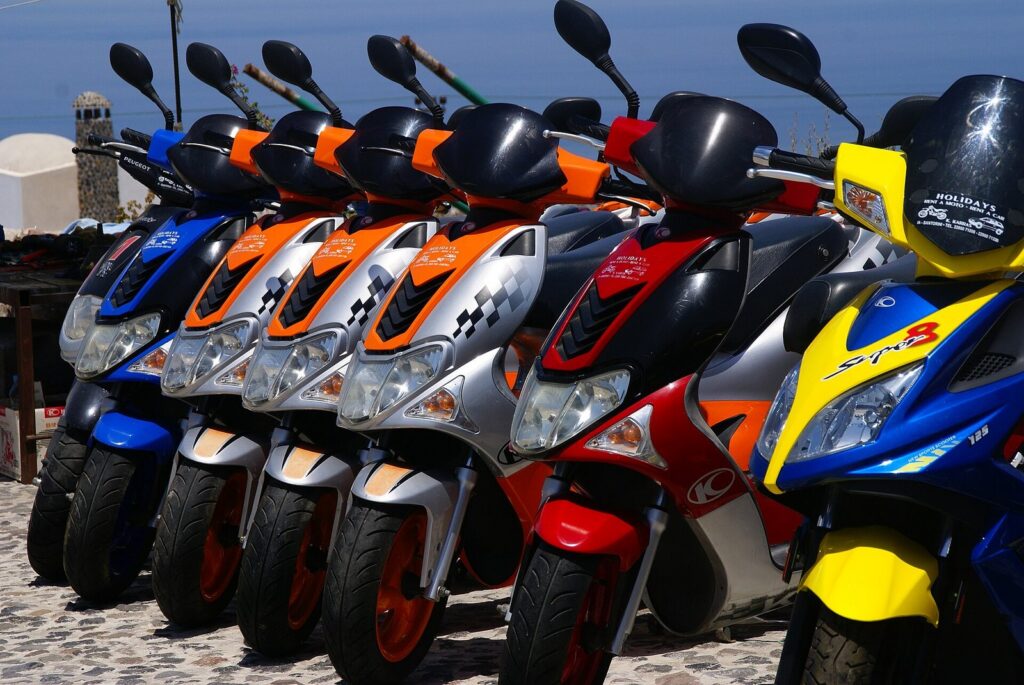
Hiring a Vespa in Rome or a quad on a Greek island is part of the fantasy for a lot of visitors. It’s also one of the commonest ways a claim gets turned down. The UK government notes that mopeds and quad bikes aren’t usually covered. Where a policy does include them, read the conditions closely: licence and helmet terms are where these claims tend to come unstuck. If your policy is silent on it, I’d take the bus.
Pre-existing conditions
Declare every condition, including the ones that are under control. The FCDO’s travel insurance advice warns that failing to declare can invalidate the policy, and that means the whole policy, not only the claim linked to the condition. A higher premium for a declared condition is far better than a policy that pays nothing when you need it.
Cruises
The UK government says cruises need additional cover, so make sure the policy names cruising and check what it pays for medical care on board and for missing the ship at a port. US travellers on Medicare should note that Medicare only covers care on board when the ship is in a US port or within six hours of one, which is rarely the case on a Mediterranean itinerary.
Car hire insurance in Europe
Car hire is the place where travellers most often pay twice, so it gets its own section.
Under EU rules, every rental car must carry third-party liability insurance that’s valid in all EU countries, and it should be included in the price you’re quoted. Everything beyond that is optional. The trouble is the excess: the most you’d pay if the car is damaged, often backed by a deposit held on your credit card.
| Option | What it does | Worth it? |
|---|---|---|
| Third-party liability | Covers damage you cause to others | Already included by law in the EU |
| Collision damage waiver (CDW) | Limits what you pay for damage to the hire car | Usually standard; often excludes tyres and glass |
| Rental desk excess cover | Reduces your excess to nothing or a small sum | Convenient, often the costly route |
| Standalone excess insurance | Repays the excess if you’re charged | Often cheaper, but buy it before you travel |
The UK government’s advice to renters is sensible: buy standalone excess cover before you travel if you want it, expect a deposit to be taken on your card anyway, and be ready for pressure selling at the desk. Read what the rental terms say is covered before you sign, and photograph the car, tyres and windscreen at pick-up.

Verdict: if you’ll drive more than a day or two, standalone excess cover usually makes sense. Your travel policy almost certainly won’t touch the car.
Europe-only or worldwide, single-trip or annual?
Insurers don’t all draw Europe’s border in the same place, and a country on the edge of the map, such as Turkey or Morocco, may fall inside a policy’s Europe zone or outside it. Read the named country list before you buy, and pick worldwide cover if your trip crosses into North Africa or the Middle East, even for a day trip.
| Policy type | Suits | Watch for |
|---|---|---|
| Single trip, Europe | One holiday a year | Trip length matched exactly to your dates |
| Annual multi-trip, Europe | Two or more trips a year, including weekends away | The maximum days per trip |
| Annual multi-trip, worldwide | Frequent travellers going beyond Europe | Paying for cover you don’t use |
| Backpacker or long-stay | Months on the road | Whether you can buy or extend it once you’ve left |
How long you’re away matters more than people think. A three-week rail trip can blow through an annual policy’s per-trip limit without anyone noticing. If you’re still working out the length of your trip, how many days you need in Europe is a good place to start, and then buy cover that fits the real dates, not the dream ones.
How and when to buy
Buy the policy the day you book something you can’t get back. Cancellation cover only protects you from the date the policy starts, so leaving it until the week before means a broken ankle in March doesn’t help with a trip in June. That’s the same logic as our advice on when to book a trip to Europe: lock in the expensive, inflexible pieces early, and protect them straight away.
When you compare policies, put the price aside until you’ve checked these:
- Medical and repatriation limits, and whether repatriation is in the core cover.
- The excess on medical claims, and whether it’s waived if you use your EHIC or GHIC.
- Cancellation cover against your actual prepaid costs.
- The activities you’ll actually do, named in the wording.
- The countries covered, named in the wording.
- Your medical declarations, answered honestly and in full.
- Any cover you already hold through a bank account or a credit card, and its conditions.
Card and bank account cover deserves a second look. It can be excellent or thin, and it can depend on paying for the trip with that card. Read its policy wording, not the card’s marketing page.
Store the policy number, the emergency assistance line and a PDF of the wording on your phone and in your email. Our Europe trip planning checklist has a slot for it next to your passport and booking references.
What to do if something goes wrong in Europe
Dial 112 for an ambulance, the fire service or the police. It’s free from any phone throughout the EU and also works in the UK alongside 999.
Then, as soon as you can, call your insurer’s emergency assistance line. Many policies want you to contact them before any major treatment or any decision about getting home, and the assistance team can steer you to a hospital they work with. Show your EHIC or GHIC at a public hospital, keep every receipt and medical report, and ask for documents in English where you can.

For theft, report it to the local police and get a written report; insurers ask for one, and many set a deadline. Crowded spots such as Las Ramblas in Barcelona, busy metro lines and main railway stations are where pickpockets work. For lost luggage, get a property irregularity report from the airline before you leave the airport.
Mistakes to avoid
- Treating a health card as insurance. It isn’t, and both the EU and the NHS say so.
- Buying the cheapest policy for a ski trip. Winter sports are normally excluded unless added.
- Leaving out a medical condition. It can void the policy entirely.
- Buying cover the week before departure. Cancellation protection starts when the policy does.
- Riding a scooter on a policy that doesn’t mention one. Assume you’re uninsured.
- Paying for desk excess cover by default. Compare standalone cover first.
- Assuming insurance replaces EU passenger rights. Claim from the airline first, then the insurer.
Planning your first big European trip? Our upcoming first trip to Europe tips round up the habits that save money and stress, and the guide to a multi-country Europe trip will cover routing several countries into one journey.
Frequently asked questions about travel insurance for Europe
Is travel insurance mandatory for Europe?
Only if you’re applying for a Schengen visa. The EU’s Visa Code asks visa applicants for travel medical insurance of at least €30,000, valid across the Schengen area for the whole stay. Visa-exempt visitors, including UK, US, Canadian and Australian citizens, aren’t required to hold a policy, although a medical and repatriation policy is still strongly worth having for almost every traveller.
Do I need travel insurance if I have a GHIC or EHIC?
Yes. The cards give you state healthcare on the same terms as local residents, but they don’t pay for being flown home, private clinics, mountain rescue, cancellation or lost belongings. The NHS describes the GHIC as not a replacement for travel insurance and recommends carrying both. Some insurers will waive your medical excess if you used your card.
Does ETIAS require travel insurance?
ETIAS isn’t in operation yet, and there’s no insurance step to plan for at this stage. For the start date, the fee and the application itself, use only the EU’s official ETIAS page at travel-europe.europa.eu, and ignore sites that offer to sell an authorisation now. The Entry/Exit System, which is running, involves no insurance check either.
Does Medicare cover me in Europe?
Usually not. Medicare says it generally doesn’t pay for healthcare outside the US, apart from narrow exceptions, and that you’ll pay the full cost in most cases. Some Medigap plans include emergency care abroad, and Part D doesn’t cover drugs bought abroad. Check your own plan, then buy a policy with medical and evacuation cover for the gap.
What should a Europe travel insurance policy cover?
Emergency medical treatment and repatriation first, with a 24-hour assistance line. Then cancellation cover that matches what you’ve prepaid, delay and missed departure cover, belongings, and personal liability. Add winter sports or other activities if you’ll do them, declare any medical conditions, and check the policy’s named countries match your route.
Do I need extra insurance to hire a car in Europe?
Third-party liability is included in every EU rental by law. What you may want is cover for the excess, the sum you pay if the hire car is damaged. Standalone excess insurance bought before you travel is often cheaper than the desk’s option, but the rental company may still hold a deposit on your credit card.
When should I buy travel insurance for a European trip?
As soon as you’ve booked anything non-refundable, such as flights, a rail pass or an apartment. Cancellation cover runs from the start date of the policy, so buying early protects the trip against illness or other listed events in the months before you go. Buying a week before departure leaves that whole period unprotected.
Is annual travel insurance worth it for Europe?
It usually makes sense once you take two or more trips a year, including short city breaks. Check the maximum days allowed per trip, since a long rail holiday can exceed it, and whether the policy’s Europe zone includes every country you’ll visit. For a single long trip, a policy matched to your exact dates is often the better fit.
Final thoughts
You can visit most of Europe without a policy, and the law won’t mind. Your bank balance might. A health card or a home plan covers far less than people assume, and the gaps are exactly the expensive ones: rescue, repatriation and a trip cancelled after you’ve paid for it. Buy medical and repatriation cover the day you book, size the cancellation limit to your prepaid costs, declare everything, and then get on with the fun part of building your Europe itinerary step by step.
Related Europe guides
- Europe Trip Planning Checklist: where the policy details sit alongside passports and bookings
- When to Book a Trip to Europe: booking windows, and why insurance should start the same day
- How to Find Cheap Flights to Europe: fare types and refunds to weigh against cancellation cover
- How Many Days Do You Need in Europe: trip length, which sets the policy dates and annual limits
- Best Interrail Routes: rail routes where missed connections are worth insuring
Sources and verification
Prices, timetables and rules in this guide were checked on 10 November 2026 against the official sources below. It is compiled from those sources rather than from other travel lists, and it does not describe first-hand visits. Fares, opening hours and entry rules change, so confirm with the operator before you book.
- EUR-Lex: Visa Code, Regulation (EC) No 810/2009
- Your Europe: unplanned healthcare and the EHIC
- NHS: apply for a free UK GHIC
- GOV.UK: foreign travel insurance
- Medicare: travel outside the US
- Your Europe: air passenger rights
- Your Europe: car rental abroad
- European Commission: Entry/Exit System
Hannah Brooks has spent fifteen years travelling, living and writing across Europe, from the Arctic tip of Norway to the south of Sicily. She has planned hundreds of European itineraries for readers and is Senior Europe Editor at EuropeanTourism.org.
Photo credits
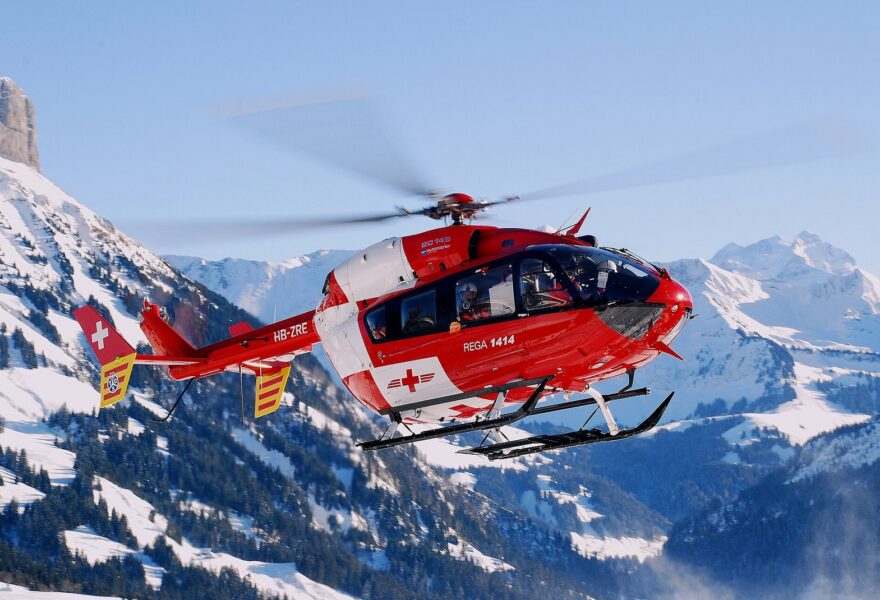
- Rega rescue helicopter over the snowy Swiss Alps, the kind of costly rescue travel insurance for Europe should cover (top photo): photo by Matthias Zepper, Wikimedia Commons (CC BY-SA 3.0)
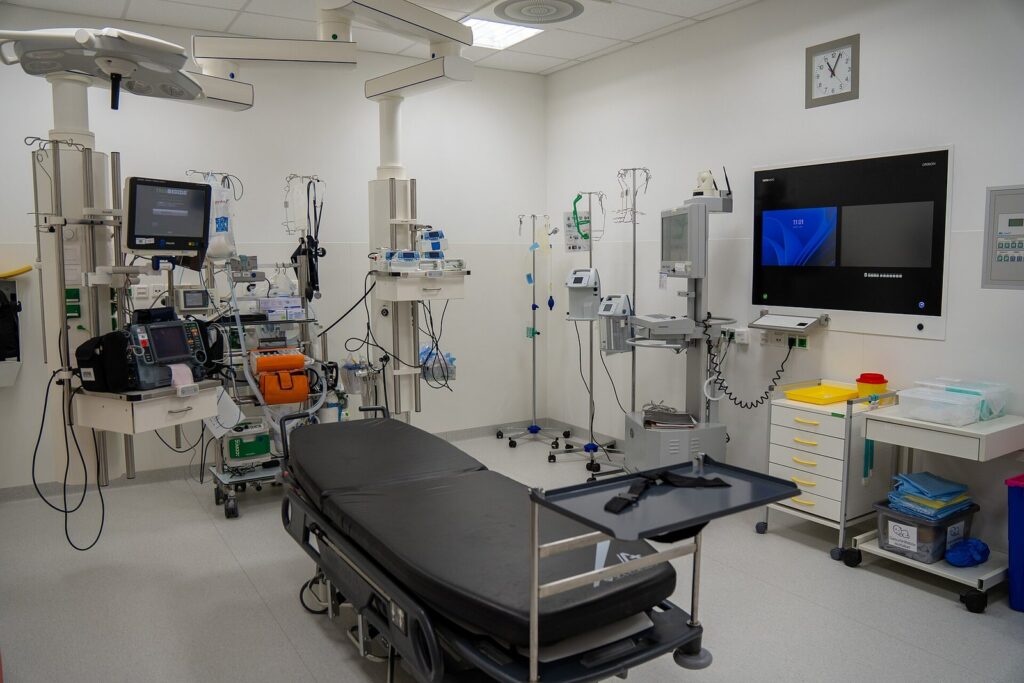
- Emergency treatment room with monitors and a trolley bed at a hospital in Wertheim, Germany: photo by Borkowski.thomas, Wikimedia Commons (CC BY-SA 4.0)
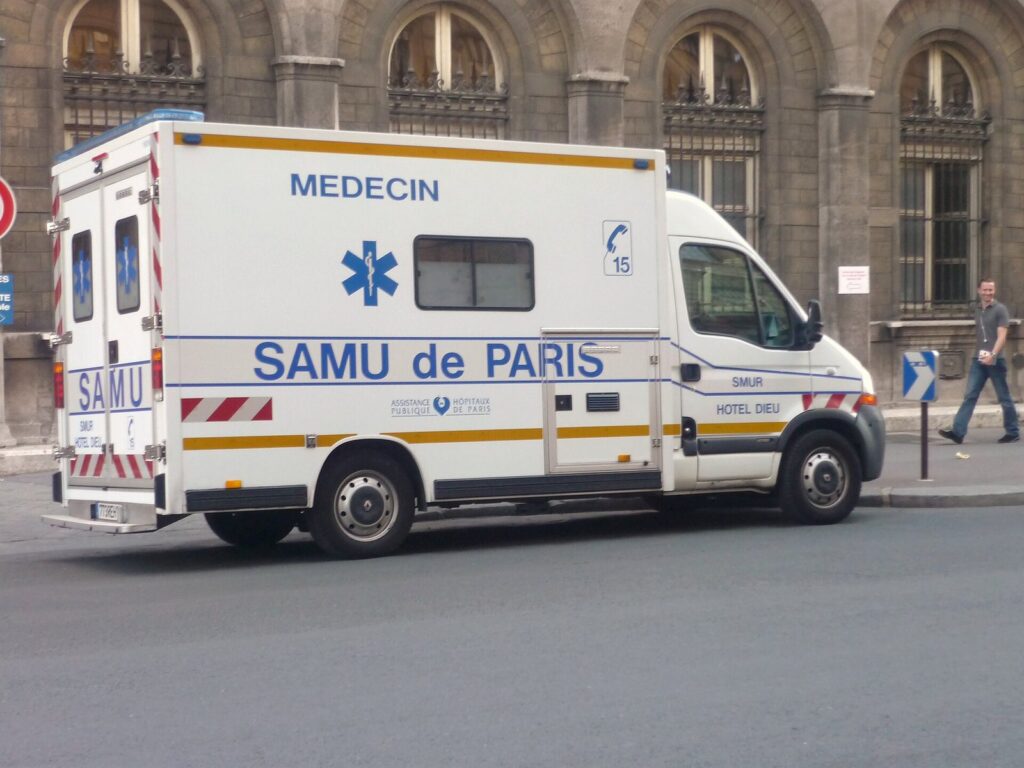
- White SAMU de Paris ambulance parked on a street in Paris, France: photo by Muffingg, Wikimedia Commons (CC BY-SA 3.0)
- Departures board and check-in hall at Frankfurt Airport in July 2023: photo by Erica Fischer, Wikimedia Commons (CC BY 2.0)
- Row of colourful rental scooters parked on a cobbled street in Oia, Santorini, Greece: photo by palindrome6996, Wikimedia Commons (CC BY 2.0)
- Winding coastal road above terraced hillsides and the sea on the Amalfi Coast, Italy: photo by Tracey Hind from Aups, France, Wikimedia Commons (CC BY-SA 2.0)
- Crowds walking under plane trees along Las Ramblas in Barcelona, Spain: photo by Eric Fischer, Wikimedia Commons (CC BY 2.0)