How to Plan a Multi-Country Europe Trip
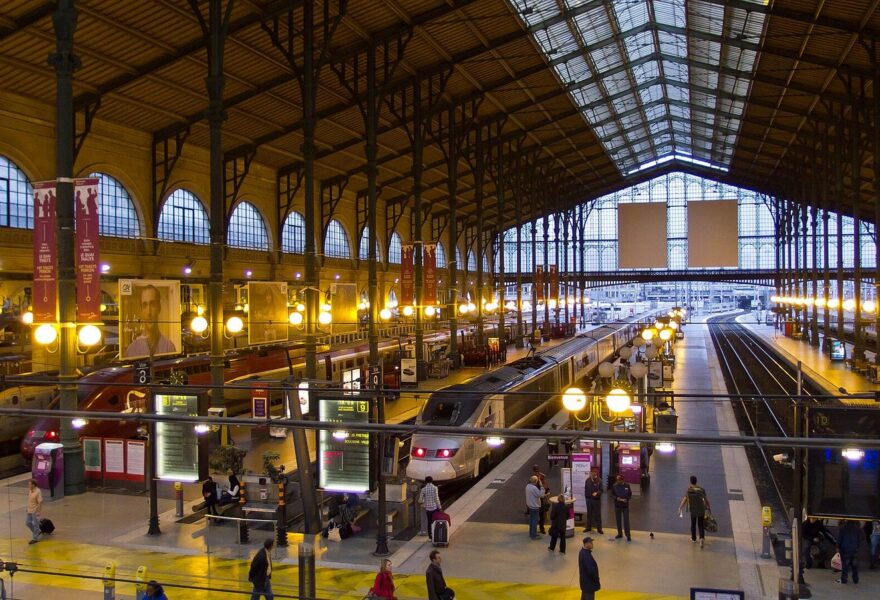
A multi country Europe trip works best when you pick a corridor rather than a wish list: two to four countries joined by trains, one flight in and a different one out, and at least three nights in each base. Get the shape right and the bookings fall into place; get it wrong and you spend the holiday in stations.
This guide is for anyone stitching borders together, first trip or fifth, and it sits under our step-by-step guide to planning a trip to Europe, which covers budget and timing in general. The caveat that matters: night-train routes and cross-border timetables changed a lot in 2025 and 2026, so confirm every international leg with the operator before you pay for beds around it. Checked against official sources in November 2026.
| At a glance | |
|---|---|
| What drives the cost | Long-distance trains, sleeper berths and city-centre beds; early booking matters more than which countries you pick |
| Time needed | About 10 days for two countries, two weeks for three, three weeks for four or five |
| Best for | Travellers happy to move every three or four days along a route with a clear direction |
| Book ahead | Your flight in and out, sleeper cabins, Eurostar, the Paris–Barcelona TGV, beds in peak months |
| Skip | One-night stops, daytime train legs much over six hours, and routes that double back on themselves |
How many countries can you really fit into one trip?
Fewer than you think. The constraint is not the number of countries but the number of moves, because every move costs you half a day: check out, get to the station, sit on the train, find the next flat, work out the tram. On a 14-day trip with a move every two days you lose the equivalent of three or four full days to transit, and the trip starts to feel like a commute with nice views.
My rule is simple: at least three nights per base, and one base per country unless the country is large. That gives you two full days on the ground between moves, which is the minimum for a city to feel like more than a checklist. Italy, Spain and France often deserve two bases each on their own.
| Trip length | Comfortable number of bases | Realistic countries | What it looks like |
|---|---|---|---|
| 7 days | 2 | 1–2 | Paris and Brussels, or Vienna and Budapest |
| 10 days | 3 | 2–3 | Berlin, Prague, Vienna |
| 14 days | 4 | 3–4 | Amsterdam, Berlin, Prague, Vienna |
| 21 days | 5–6 | 4–5 | Paris, Switzerland, northern Italy, Rome, with a night train to break up a long leg |
| 30 days | 7–8 | 5–7 | A full loop, with two or three slow stops in smaller towns |
The 7-day row is honest rather than ambitious. A week is enough for one country done properly or two neighbours with a short train between them. If you only have that long, our guide to how many days you need in Europe goes into which splits work, and it is worth reading before you commit to anything that has the word “whirlwind” in it.
There is a second test, and it matters more than the count. Ask yourself whether you would be happy to cut the final country if the trip ran long. If the answer is no, that country belongs earlier in the route. If the answer is “honestly, yes”, cut it now and give the nights to a place you are excited about.
Verdict: two countries in 10 days, three in two weeks. Anyone who promises five countries in 10 days is selling you a coach seat, not a holiday.
Draw the route before you choose the countries
Most multi-country trips go wrong at the map stage. People list the places they want to see (Paris, Rome, Amsterdam, Prague, Barcelona) and then try to join the dots. Those five cities sit at the corners of a rough pentagon spread across half the continent, and no train network makes that efficient.
Do it the other way round. Pick a corridor: a line of cities that sit naturally one after another, ideally with direct trains between each pair. Europe has a handful of these, and they are the backbone of the routes later in this guide:
- The north-west corridor: London, Paris, Brussels, Amsterdam. Short high-speed hops, nothing much over three and a half hours.
- The central corridor: Berlin, Prague, Vienna, Budapest, with Munich as an easy side door into Vienna.
- The Alpine corridor: Paris or Zurich into northern Italy, then down the Italian high-speed line to Florence and Rome.
- The Iberian corridor: Paris to Barcelona, then Madrid, then Portugal.
You can join two corridors with a night train or a single flight. What you should avoid is zigzagging: Paris to Prague to Barcelona to Amsterdam might look like four great cities on paper, but it is three long journeys in alternating directions.
Fly into one city and out of another
One of the most useful booking tricks for a linear route is the open-jaw ticket: you fly into the first city on your route and home from the last, so you never have to go back to where you started. On the airline sites and the big flight-search tools, use the “multi-city” option rather than “return”, put your arrival and departure cities in, and compare the result with two separate one-way tickets and with an ordinary return to a single city.
Open-jaw pricing varies by airline and route, so treat it as something to test rather than a guaranteed saving. What it reliably saves is time: on a 10-day trip, the day you would spend getting back to your arrival city is a tenth of the holiday. Our guide to finding cheap flights to Europe covers the search tactics in more detail.
Anchor the ends near big airports
Start and end the route in cities with plenty of long-haul flights: London, Paris, Amsterdam, Frankfurt, Madrid, Lisbon, Rome, Vienna, Munich and Zurich are the obvious anchors. A route that starts in Amsterdam and ends in Rome is easy to fly; one that starts in Bruges and ends in Ljubljana means two extra connections.
Put the slow place in the middle
If you want a few days in the countryside (the Swiss Alps, Tuscany, the Douro), put them in the middle of the trip, not at the end. Arriving on day one into a rural base after a long-haul flight is hard work, and finishing in the hills means a long transfer on the day you fly. Cities at the ends, scenery in the middle.
Six multi-country routes that work by train
These are routes where the trains do most of the work, where each leg is a day trip in length rather than an endurance test, and where the timetables are published by the operators themselves. Journey times are the operators’ own advertised figures; check the specific departure before you book, because times vary by train.
1. London, Paris, Brussels and Amsterdam
The easiest first multi-country trip in Europe, and the one where the train beats the plane on every leg. Eurostar advertises London to Paris in 2h16 on most trains (up to 2h37), with fares from £39 or €44 one way as of November 2026. From Paris you can go to Brussels and on to Amsterdam, where Eurostar advertises about 1h52 from Brussels to Amsterdam Centraal; Eurostar also advertises direct Paris–Amsterdam trains at about 3h20, from €35.
For anything touching the Netherlands, including London to Amsterdam, check Eurostar’s site for the current service before you build the trip around it. Between Brussels and Amsterdam there is also the slower EuroCity Direct, which reaches Amsterdam Zuid in about 2h08 and is the fallback if Eurostar seats are scarce.
| Leg | Train | Advertised time | Notes |
|---|---|---|---|
| London St Pancras–Paris Nord | Eurostar | 2h16 most trains, up to 2h37 | From £39/€44 one way |
| Paris Nord–Amsterdam Centraal | Eurostar | about 3h20 direct | From €35; check eurostar.com for current service |
| Brussels Midi–Amsterdam Centraal | Eurostar | about 1h52 | Check eurostar.com for current service |
| Brussels–Amsterdam Zuid | EuroCity Direct | about 2h08 | Slower fallback to southern Amsterdam |
Verdict: ideal for 10 days. Four nights in Paris, two or three in Brussels (or swap Brussels for Bruges), three or four in Amsterdam. If London is on the list, do it first or last rather than in the middle.
2. Berlin, Prague, Vienna and Budapest
A good-value long route, and my pick for a two-week trip by train. Every leg is direct, and every leg is roughly the length of a long lunch plus a book.
- Berlin to Prague: Railjet, about four hours; DB’s route page showed direct trains of 3h57 and 4h03 for a November 2026 date.
- Prague to Vienna: Czech Railways advertises Railjets of 3h59, every two hours.
- Vienna to Budapest: about 2h40 by Railjet, with an hourly service by Railjet or EuroCity according to ÖBB.
| Leg | Train | Advertised time | Frequency |
|---|---|---|---|
| Berlin–Prague | Railjet | about 4h (3h57–4h03 sampled) | Several direct trains a day; check DB |
| Prague–Vienna | Railjet | 3h59 | Every two hours |
| Vienna–Budapest | Railjet or EuroCity | about 2h40 | Hourly |
| Munich–Vienna | Railjet / Railjet Xpress | 4h28 direct (sampled) | Every two hours |
The Munich line is worth knowing as an entry or exit. ÖBB runs Railjets every two hours between Munich and Vienna, and DB’s planner showed a direct Railjet Xpress at 4h28 for a mid-November 2026 date, with its route page advertising fares from €27.99. Fly into Munich, ride to Vienna, then Budapest, Prague and Berlin, and fly home from Berlin: it is the same corridor with a different front door.
Verdict: four countries in 14 days without a single flight inside Europe. Prague and Budapest also tend to be gentler on the budget than Paris or Amsterdam, though Vienna is not a cheap city.
3. Paris, Switzerland and northern Italy
The scenic route. Paris to Switzerland by TGV Lyria, a few days in Zurich, Lucerne or the Bernese Oberland, then south through the Alps into Milan and on down Italy’s high-speed spine.
Between Zurich and Milan the train is a EuroCity Express through the Gotthard base tunnel; check SBB for the current timetable and fares before you fix the Swiss and Italian nights either side of it. Once you are in Italy, the high-speed trains do the rest:
| Leg | Operator | Advertised time | Notes |
|---|---|---|---|
| Zurich–Milan | EuroCity Express (SBB/Trenitalia) | check SBB for the current timetable | Pass holders pay a compulsory reservation |
| Florence–Venice | Italo | about 2h | Italo also advertises fares from €18.90 |
| Florence–Venice | Trenitalia Frecciarossa | from 2h13 | Direct to Venezia Santa Lucia |
| Rome–Florence | Italo | 1h25 | Fares from €14.90 |
| Rome–Florence | Trenitalia Frecciarossa | 1h30 | Covered by the Interrail Pass with a reservation |
Two operators run Italy’s high-speed line, Trenitalia (Frecciarossa) and Italo, and they compete on price. That is good news for point-to-point travellers and a trap for pass holders, because Italo is not covered by the Interrail Pass.
Verdict: three weeks is the honest length for Paris, Switzerland, Milan or the lakes, Venice, Florence and Rome. Try it in two and the Swiss leg becomes a train window. Switzerland is also the expensive end of the trip, so give it three nights and spend them well. Our Switzerland travel guide and Italy travel guide help you choose the bases.
4. Paris, Barcelona and Madrid
The direct train worth building a route around is SNCF’s TGV INOUI from Paris Gare de Lyon to Barcelona Sants. It is a long day, so check SNCF Connect for the current timetable and the number of trains on your date; the operator’s route pages showed fares from €85 in second class in September 2026, on selected trains and subject to availability. Renfe has shelved its planned high-speed service to Paris, so SNCF is the operator for the direct Paris–Barcelona service.
From Barcelona, Madrid is about 2h30 by AVE, and this is one of the most competitive train routes in Europe: Renfe’s AVE, OUIGO and iryo all run it. OUIGO advertises low promotional fares, which are a floor rather than what most people pay in August; check ouigo.com for your date.
| Leg | Operator | Time | Notes |
|---|---|---|---|
| Paris Gare de Lyon–Barcelona Sants | SNCF TGV INOUI | check SNCF Connect for the current timetable | From €85 2nd class (September 2026, selected trains) |
| Barcelona–Madrid | Renfe AVE, OUIGO, iryo | about 2h30 | OUIGO has low promotional fares; check ouigo.com |
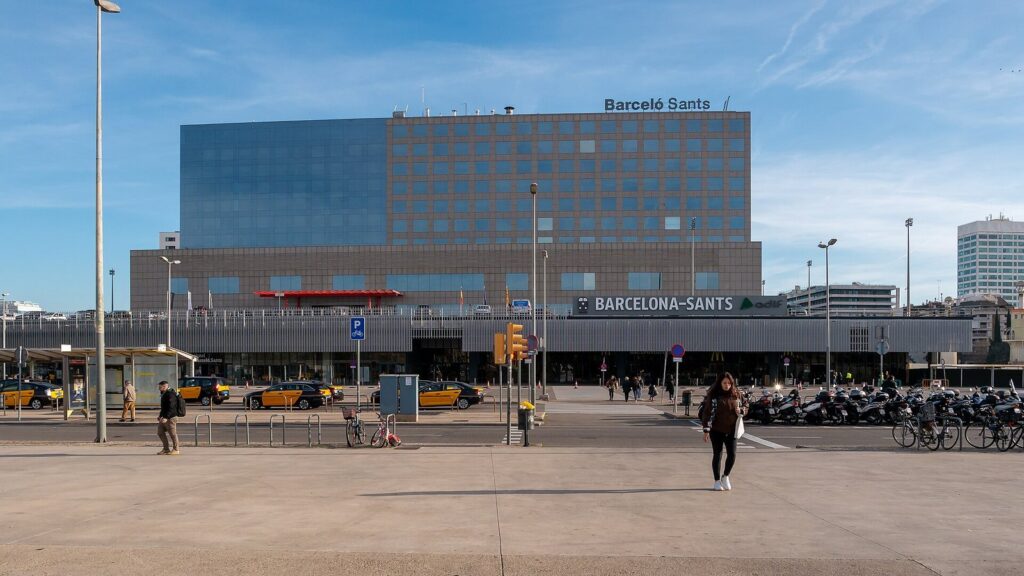
Verdict: a strong two-week trip if you love cities and food: four nights in Paris, four in Barcelona, four or five in Madrid. If the TGV day feels like too much, fly Paris–Barcelona and use the saved time for a day out to Girona or Toledo. See our France travel guide for where else the TGV can take you on the way south.
5. Spain and Portugal
Here the train map lets you down. There is no fast direct train between Madrid and Lisbon. Interrail’s own route advice for pass holders is a three-train chain (Intercity, regional, Intercity) via Badajoz and Entroncamento, with reservations on two of the legs. The European Commission’s target is about five hours by 2030 and about three by 2034, but those are plans, not timetables.
So for most people the answer is one short flight from Madrid or Seville to Lisbon, then the train inside Portugal. Lisbon to Porto on CP’s Alfa Pendular takes a little under three hours on CP’s published timetables, and CP lists a 2026 ordinary single fare of €35.70 in Turística (second class) and €49.90 in Conforto. Check CP for the current timetable and promotional fares.
| Leg | Best option | Time | Notes |
|---|---|---|---|
| Madrid–Lisbon | Short flight | check airlines | The rail route needs three trains via Badajoz |
| Lisbon–Porto | CP Alfa Pendular | a little under 3h | €35.70 Turística / €49.90 Conforto ordinary single, 2026 |
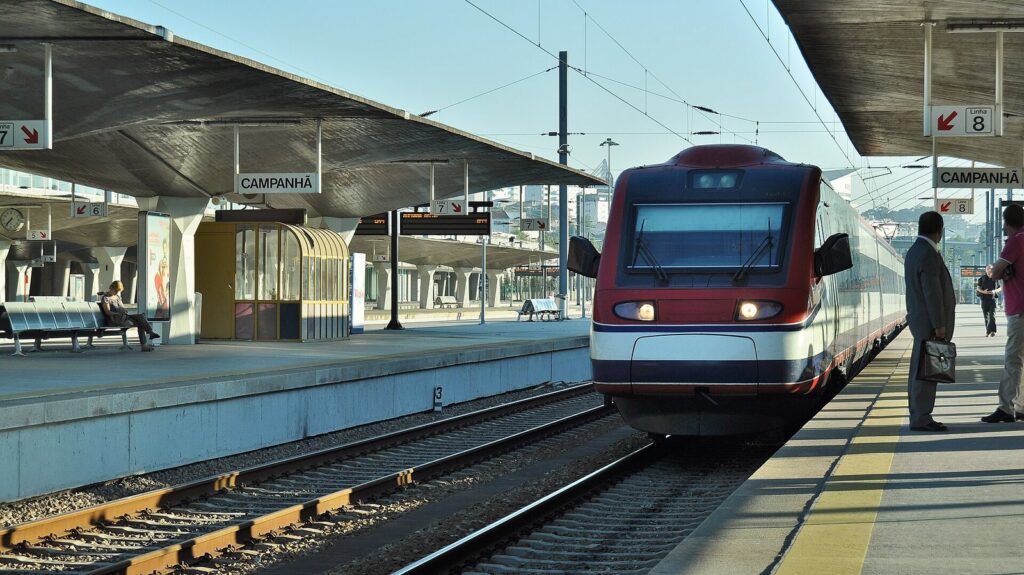
Verdict: Spain plus Portugal needs more time than people expect; give it two weeks for Madrid, Andalusia, Lisbon and Porto. One internal flight is the right call here, not a failure of rail principles. Our Portugal travel guide covers what to do with the Porto end.
6. A grand loop for three weeks or more
With three weeks or more you can join two corridors. The cleanest version: London, Paris, Amsterdam, then the European Sleeper overnight to Berlin, then Prague, Vienna and Budapest, flying home from Budapest or Vienna. The night train turns the longest leg of the trip into a night’s accommodation, which is exactly what sleepers are for.
The Iberian version works too: Paris, Barcelona, Madrid, a flight to Lisbon, Porto, and home from Porto or Lisbon. What does not work in three weeks is both: Western Europe’s corners are too far apart to do Iberia and Central Europe in one trip without living on planes.
Verdict: for a first long trip, pick one of the two loops and save the other for next time. You will enjoy both more.
Night trains: when a sleeper earns its place
A night train is worth it when the daytime alternative is seven or more hours, or a flight with two airport transfers. It saves a hotel night and a travel day at once. It is not worth it for a four-hour hop: you board late, wake early, and arrive tired in a city where you cannot check in until the afternoon.
The sleeper map has changed sharply, so start from what is running now rather than what you read a couple of years ago.
European Sleeper runs the most useful line for a multi-country trip in the north. Its timetable lists train ES 453 from Brussels-Midi to Prague, calling at Antwerp, Roosendaal, Rotterdam, Den Haag HS, Amsterdam Centraal, Amersfoort, Deventer, Berlin Gesundbrunnen and Dresden, with ES 452 coming back. It leaves Brussels on Mondays, Wednesdays and Fridays and Prague on Tuesdays, Thursdays and Sundays, so plan your Amsterdam nights around those days. The operator also runs Berlin–Paris and Brussels–Milan; the Milan service began on 9 September 2026, three times a week. Fares on the Amsterdam page start at €49.99 in November 2026, and from €59.99 out of Prague.
ÖBB Nightjet is the big network in the middle of the continent. It runs a daily Vienna–Amsterdam sleeper (also from Innsbruck), Vienna–Rome, Vienna–Brussels on selected nights, and lines to Zurich, Berlin and Hamburg among others. Most trains can be booked up to 360 days ahead.
| Overnight route | Operator | How often | Use it to join |
|---|---|---|---|
| Brussels–Amsterdam–Berlin–Prague | European Sleeper | Three nights a week each way | North-west and Central Europe |
| Paris–Berlin | European Sleeper | Check the operator’s timetable | France and Germany |
| Brussels–Milan | European Sleeper | Three times a week (from September 2026) | Benelux and northern Italy |
| Vienna–Amsterdam | ÖBB Nightjet | Daily | Central Europe and the Netherlands |
| Vienna–Rome | ÖBB Nightjet | Check nightjet.com | Austria and Italy |
| Vienna–Brussels | ÖBB Nightjet | Selected nights, not daily | Austria and Belgium |
What not to plan around: the Paris Nightjets to Vienna and Berlin ended in December 2025, the Nightjets from Munich and Vienna to La Spezia are suspended, and there is no Nightjet into France or Spain. Older blog itineraries still show these, so if a route plan depends on one of them, rebuild it.
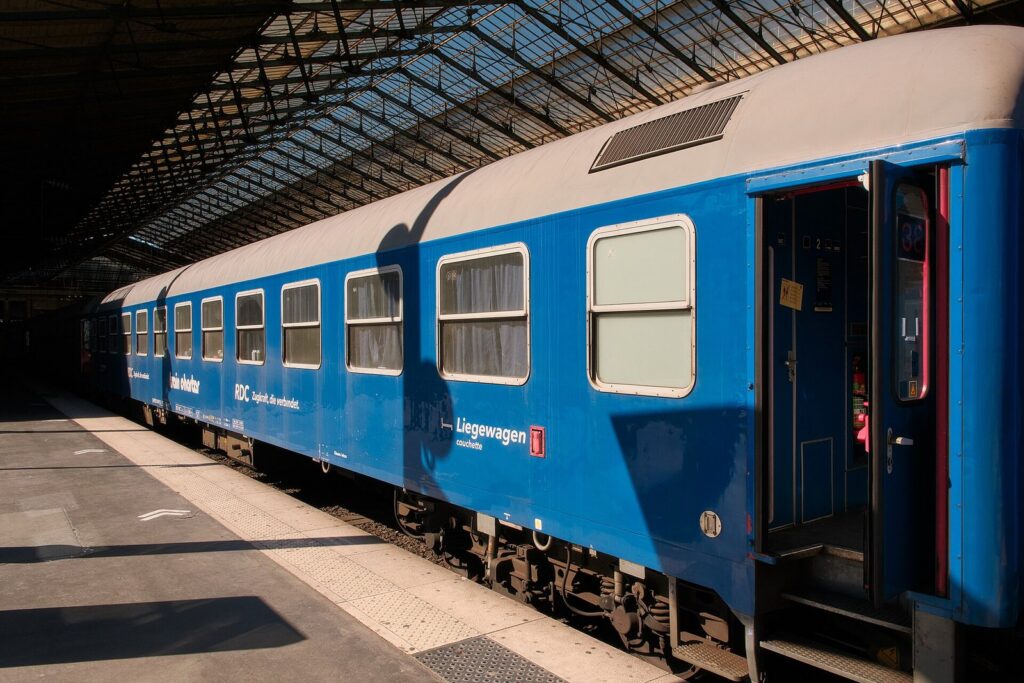
Verdict: one sleeper per trip is plenty for most people, placed on the longest leg. Book a private compartment if two of you are travelling and sleep matters; the cheapest shared berths are fine for a solo traveller on a budget. Our guide to getting around Europe compares sleepers with the daytime options in more depth.
Should you buy an Interrail Pass for a multi-country trip?
Usually not for a short, fixed route; often yes for a long, loose one. Since Eurail merged into Interrail in September 2026, the multi-country rail pass is sold as the Interrail Pass. The Global Pass covers a 33-country network. If you live in Europe, it allows only one outbound and one inbound journey in your own country of residence.
The thing that catches people out is reservations. A pass covers the ride, but most high-speed and night trains also need a paid seat or berth reservation. Interrail gives average reservation prices of €10 for domestic trains, €15 for international trains and €20 for night trains, plus a €2 booking fee per reservation on its own site. On some of the routes in this guide the fee is much higher:
| Train | Pass-holder reservation (2026) | Compulsory? |
|---|---|---|
| TGV INOUI Paris–Barcelona | €35, either class | Yes |
| Eurostar London–Paris or Brussels | €35 Standard, €40 Plus | Yes, with a pass-holder quota |
| Eurostar London–Amsterdam | €35 Standard, €43 Plus | Yes |
| EuroCity Express Milan–Zurich | €13–17, either class | Yes |
| Frecciarossa in Italy | €13 | Yes |
| Railjet Berlin–Prague | €5.50 second class, €6.90 first | Optional |
| Railjet Prague–Vienna | €3 | Optional, recommended |
| Italo in Italy | not covered by the pass | Buy a normal ticket |
Two other details matter for multi-country trips. The Global Plus Pass covers the reservation costs on most trains, which changes the maths if your route is mostly high-speed. And the One Country Pass, which normally covers one country, has a few multi-country exceptions: the Benelux Pass (Belgium, the Netherlands and Luxembourg), the Nordic Pass (Denmark, Norway, Sweden and Finland) and the German Rail Twin Pass. If your trip is Amsterdam, Brussels and Luxembourg, the Benelux Pass is the one to price.
Check interrail.com for current pass prices and travel-day options; they change with promotions, and comparing them with a handful of advance point-to-point fares is the only honest way to decide.
Verdict: price your route both ways. On the Berlin–Prague–Vienna–Budapest corridor, where reservations are cheap or optional, a pass can work well. On a Paris–Barcelona–Madrid trip with compulsory reservations and cut-price competitors, advance tickets usually win.
Trains, flights, buses or a car: choosing for each leg
You do not have to pick one mode for the whole trip. Pick the right one for each leg.
| Mode | Wins when | Watch out for |
|---|---|---|
| Train | City centre to city centre in up to about five or six hours | Compulsory reservations, sold-out peak trains, the odd missing cross-border link |
| Flight | Legs much over six hours by rail, or with no good rail link (Madrid–Lisbon) | Airports far from town, bag fees, the time lost to security and transfers |
| Night train | One long leg you would otherwise lose a day to | Limited nights per week, early arrivals |
| Coach | Tight budgets, routes the trains serve badly | Long journey times and traffic |
| Hire car | Rural regions: Tuscany, the Douro, the Alps | One-way and cross-border fees, city-centre driving and parking |
Two specific notes. Budget flights look cheap until you add a cabin bag, the train from a secondary airport and the early check-in; compare the door-to-door time and cost, not the headline fare. And a hire car is best kept regional: collect it, use it for the countryside, and drop it in the same country. One-way rentals between countries are possible with some companies, but they usually carry a drop-off fee that varies by company and location. It appears in the quote, so read the full rental terms (including which countries the car is allowed to enter) before you book.
Borders, passports and the 90/180 rule
A multi-country trip crosses borders, and the rules depend on which “Europe” you are in. Three overlapping clubs cause most of the confusion:
| Group | Who is in it | What it means for you |
|---|---|---|
| Schengen area | 29 countries: 25 EU states plus Iceland, Norway, Switzerland and Liechtenstein | No routine passport checks between members; one shared short-stay limit |
| European Union | 27 states, including Ireland and Cyprus, which do not apply Schengen rules | Shared single market; not the same as Schengen |
| Eurozone | 21 countries using the euro, Bulgaria since 1 January 2026 | One currency; Switzerland, Czechia, Hungary, Poland, Denmark, Sweden and Norway all have their own |
The United Kingdom is in none of the three. Ireland is in the EU but outside Schengen, and Cyprus is not yet applying Schengen rules.
The rule that matters for long trips is the short-stay limit: visitors who do not need a visa can stay up to 90 days in any 180-day period across the whole Schengen area, not per country. Days in the UK and Ireland do not count towards it. The European Commission has a short-stay calculator on its home affairs site if your trip is long or you have been in Schengen recently.
Since 10 April 2026 the Entry/Exit System (EES) has been fully operational at Schengen external borders in 29 countries, registering non-EU visitors’ entries and exits electronically instead of stamping passports. Allow extra time at your first Schengen border. ETIAS, the travel authorisation for visa-free visitors, is not yet in operation; check the EU’s official ETIAS page for its status rather than any third-party site that offers to sell you one.
If your route includes Britain, most visa-free visitors need a UK Electronic Travel Authorisation, which costs £20 on GOV.UK. The full document rundown is in our upcoming guide to documents needed to travel to Europe.
Money across several countries
Most of a typical route will be in euros, but not all of it. Switzerland uses the Swiss franc, Czechia the koruna, Hungary the forint, Poland the złoty, and the UK the pound; Denmark, Sweden and Norway keep their own krone or krona. Bulgaria joined the euro on 1 January 2026, so older advice about the lev is out of date.
The practical answer is a card with no foreign transaction fee, used everywhere it is accepted, plus a small amount of local cash for each non-euro country. When a card terminal or cash machine offers to charge you in your home currency, say no and pay in the local one: the conversion the machine offers is rarely in your favour. Do not change large sums at airport kiosks.
Verdict: for a Berlin–Prague–Vienna–Budapest trip you will handle three currencies (euro, koruna, forint) in two weeks. Spend down the cash before each border rather than collecting coins you cannot use.
Booking order for a multi country Europe trip
Book in this order and each step makes the next one easier.
- Fix the route and the nights per base. On paper, before you pay for anything.
- Book the flight in and the flight out. Open-jaw if the route is linear. This locks the start and end dates.
- Book anything with limited capacity and a long booking window. Eurostar sells tickets 10 to 11 months ahead on its main routes, including London to Paris, Brussels and Amsterdam; most Nightjets open up to 360 days ahead. Sleeper compartments and peak-summer Eurostars sell out first.
- Book the beds. Central, near the main station if you are moving often. Flexible rates are worth a little extra on a multi-stop trip, because one change ripples through the rest.
- Book the remaining trains as each opens for sale. Fares on most high-speed routes rise as the train fills, so the cheapest tickets go early. Check each operator’s own site for when its timetable opens.
- Book timed-entry sights last, once the dates are fixed.
For the timing side in more detail, see when to book a trip to Europe; our forthcoming guide on how to book a Europe trip will walk through the booking sites themselves.
| Book well ahead | Book a few weeks ahead | Leave until you are there |
|---|---|---|
| Long-haul flights, sleepers, Eurostar, Paris–Barcelona TGV | Most high-speed trains, beds outside peak season | Regional trains, city transport, most restaurants |
| Beds in Venice, Amsterdam and Barcelona in summer | Timed-entry museums | Day trips you might skip if the weather turns |
Our Europe trip planning checklist turns this into a tick list with dates.
What to skip
Skip the multi-country “highlights” day tours that promise three countries in a day from one base; you see a lot of motorway. Skip buying every train ticket the week you book your flights, because some routes will not be on sale yet and you will be tempted onto a worse alternative. And skip the urge to add “just one more” country once the plan is set. If a stop is optional in January, it will feel like a chore in July.
Making moving days easy
A good multi-country trip is mostly a series of well-run moving days. The places take care of themselves; it is the transitions that decide whether the trip feels relaxed or ragged.
Pack for stairs, not for the car boot. You will lift your bag onto racks, carry it over station bridges and drag it across cobbles. One case you can lift above your head, or a backpack, makes every move quicker. If you would not carry it up three flights of a walk-up in Prague, it is too big.
Travel mid-morning. A train around ten or eleven lets you check out without rushing, eat breakfast, and arrive mid-afternoon as rooms become ready. The first train of the day saves a little time on paper and costs you a morning of energy.
Sleep near the station on short stays. For a three-night stop in a city you will mostly explore on foot, staying close to the main station means a short walk on both moving days. On longer stops, stay where you want to spend your evenings and take a taxi or tram to the train.
Reserve a seat on busy routes even when it is optional. On a Friday afternoon out of a capital, or on any route in August, a reservation buys you a guaranteed seat near your luggage. On the Central European Railjets the optional pass-holder reservation costs a few euros, which is cheap insurance.
Keep a buffer before anything you cannot move. Do not plan a sleeper departure, a Eurostar or your flight home on the same day as a long connection. If one train runs late you want slack, not a chain reaction.
Keep the bookings in one place. A single document or app with every ticket, booking reference and address saves you hunting through emails on a platform with patchy signal.
Verdict: the routes in this guide are not hard, but moving days reward a little discipline. Light bags, sensible departure times and one buffer per long transfer make the difference.
Mistakes that wreck multi-country trips
- Too many one-night stops. The single most common error. If a place only gets one night, ask whether it should be a day trip instead.
- Building a route around a train that no longer runs. The Paris Nightjets are the classic example. Check every cross-border train on the operator’s own site, not a blog itinerary.
- Assuming a pass means free travel. Reservations on high-speed and night trains add up fast. Price them before you buy.
- Mixing up Schengen and the EU. Your 90 days count across all 29 Schengen countries together, and the UK has its own entry rules.
- Finishing far from your flight home. Sleep in the departure city on the last night. A morning train to catch a midday long-haul flight leaves no room for a delay.
- Skipping insurance on a trip with ten non-refundable bookings. One missed connection can unravel the whole chain. Our guide to travel insurance for Europe covers what a multi-stop trip should look for.
- Ignoring Sundays and holidays. Shops, some sights and some regional trains thin out on Sundays and public holidays in much of Europe; check before you plan a big day.
Three sample routes: 10, 14 and 21 days
These are frames to adapt, not prescriptions. Each keeps to three or more nights per base, with one exception where a short stop earns its place.
10 days: Paris, Brussels and Amsterdam
| Nights | Base | Getting there |
|---|---|---|
| 4 | Paris | Fly in (or Eurostar from London) |
| 2 | Brussels or Bruges | Train from Paris |
| 4 | Amsterdam | Train from Brussels; fly home from Amsterdam |
14 days: Berlin, Prague, Vienna and Budapest
| Nights | Base | Getting there |
|---|---|---|
| 4 | Berlin | Fly in |
| 3 | Prague | Railjet, about 4h |
| 4 | Vienna | Railjet, 3h59 |
| 3 | Budapest | Railjet, about 2h40; fly home from Budapest |
21 days: Paris, Switzerland and Italy
| Nights | Base | Getting there |
|---|---|---|
| 4 | Paris | Fly in |
| 3 | Lucerne or Interlaken | TGV Lyria to Switzerland, then a Swiss connection |
| 2 | Milan or Lake Como | EuroCity Express from Zurich |
| 3 | Venice | High-speed train |
| 4 | Florence | Italo about 2h, Frecciarossa from 2h13 |
| 5 | Rome | Italo 1h25 or Frecciarossa 1h30; fly home from Rome |
For more day-by-day plans, our Europe itinerary guide has routes for every trip length, and if this is your first time over, read first trip to Europe: everything to know alongside it.
Frequently asked questions about a multi-country Europe trip
How many countries should I visit in two weeks?
Three is the comfortable number, four if they are close together and linked by direct trains, such as Germany, Czechia, Austria and Hungary. Allow at least three nights in each base so you get two full days between moves. Every extra country costs you roughly half a day in transit, and that adds up quickly on a 14-day trip.
Is it cheaper to travel Europe by train or by plane?
It depends on the leg. On short high-speed routes such as London–Paris or Rome–Florence, an advance train ticket is often competitive and saves the airport time. On long legs with no good rail link, such as Madrid–Lisbon, a flight usually wins. Compare door-to-door cost and time, including bags and airport transfers, rather than headline fares.
Do I need a visa to visit several European countries?
Visa-free visitors can stay up to 90 days in any 180-day period across the whole Schengen area, which counts as one zone, not per country. The UK and Ireland sit outside Schengen and have their own rules; Britain asks most visa-free visitors for an Electronic Travel Authorisation. Check your nationality’s rules on the official EU and UK government sites before booking.
Is the Interrail Pass worth it for a multi-country trip?
It is worth it for long, flexible trips through countries where reservations are cheap or optional, such as Austria, Czechia and Hungary. It is less useful on routes with high compulsory reservations, such as Paris–Barcelona at €35, or where a competitor like Italo is not covered. Price the pass plus reservations against advance tickets for your actual route.
Should I fly into one city and out of another?
Yes, if your route runs in a line. An open-jaw ticket, searched with the “multi-city” option, saves you the day it would take to get back to your arrival city. Prices vary by airline and route, so compare it with a standard return and with two one-way tickets before booking.
Are night trains a good idea in Europe?
They are good for one long leg per trip, where they save both a hotel night and a travel day. European Sleeper’s Brussels–Amsterdam–Berlin–Prague line and ÖBB’s Nightjet from Vienna to Amsterdam or Rome are the most useful for multi-country routes. Skip them for journeys under about five hours, where you arrive tired for no real gain.
What is the best order to book a multi-country trip?
Fix the route and nights first, then book the flights in and out, then anything with limited capacity, such as sleepers and Eurostar, which open many months ahead. Book beds next, choosing flexible rates where you can, then the remaining trains as they go on sale. Timed-entry sights come last, once the dates are locked.
Can I hire a car in one country and drop it in another?
Often yes, but expect a one-way drop-off fee that varies by company and location. It shows in the quote, so read the full terms before you book, including which countries the car may enter. For most multi-country trips it works better to hire a car only for a rural region and return it in the same country.
Final thoughts
The best multi-country trips are the ones that feel unhurried: a clear line across the map, three or four nights in each place, one sleeper on the longest leg, and a flight home from the last stop. Choose the corridor first and the countries second. Then check every cross-border train with its operator, because the network keeps changing. For the wider planning steps, from budget to timing, go back to our complete Europe trip planning guide.
Related Europe guides
- How Many Days Do You Need in Europe: how to split your days between countries
- When to Book a Trip to Europe: the timing behind each booking step
- How to Get Around Europe: Trains, Planes, Buses & Cars (2026): trains, sleepers, flights and coaches compared
- Europe Itinerary: How to Plan the Perfect Trip (Routes & Day-by-Day): day-by-day routes for every trip length
- Europe Trip Planning Checklist: a dated tick list for the whole trip
- First Trip to Europe: Everything to Know: the basics if this is your first time over
Sources and verification
Prices, timetables and rules in this guide were checked on 10 November 2026 against the official sources below. It is compiled from those sources rather than from other travel lists, and it does not describe first-hand visits. Fares, opening hours and entry rules change, so confirm with the operator before you book.
- European Sleeper: timetable
- Eurostar: routes and tickets
- DB: Munich to Vienna by train
- Interrail: Global Pass
- Interrail: One Country Pass
- European Commission: the Schengen area
- European Commission: border crossing and EES
- GOV.UK: Electronic Travel Authorisation
Hannah Brooks has spent fifteen years travelling, living and writing across Europe, from the Arctic tip of Norway to the south of Sicily. She has planned hundreds of European itineraries for readers and is Senior Europe Editor at EuropeanTourism.org.
Photo credits
- Platforms under the iron roof of Paris Gare du Nord, a classic start for a multi country Europe trip (top photo): photo by Ed Webster, Wikimedia Commons (CC BY 2.0)
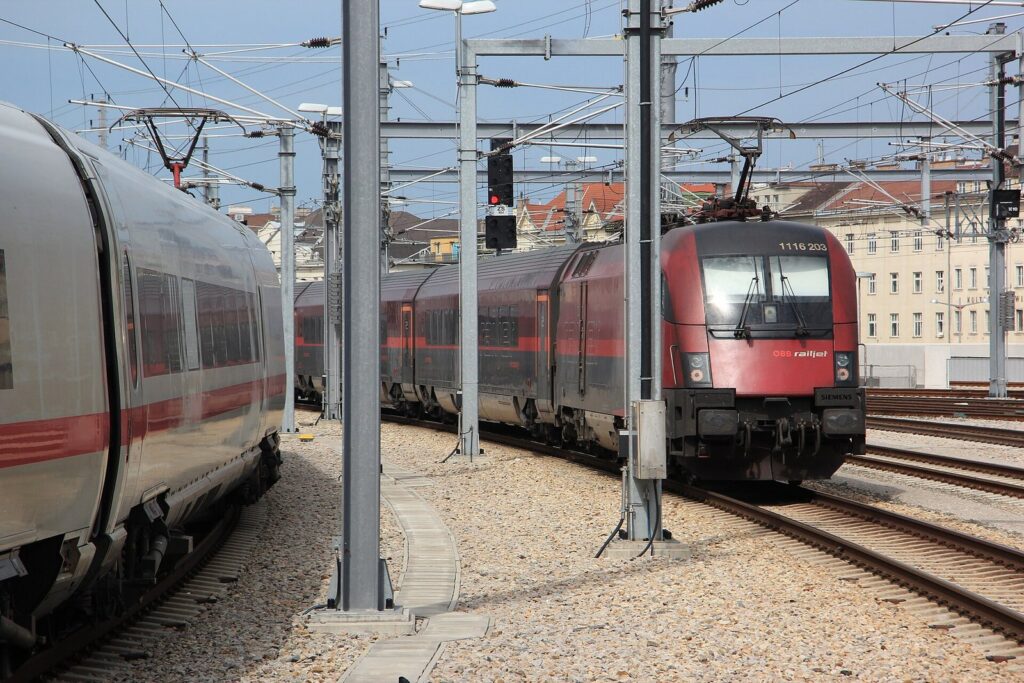
- An ICE arriving and an ÖBB Railjet leaving Wien Hauptbahnhof: photo by User:Karl Gruber, Wikimedia Commons (CC BY-SA 4.0)
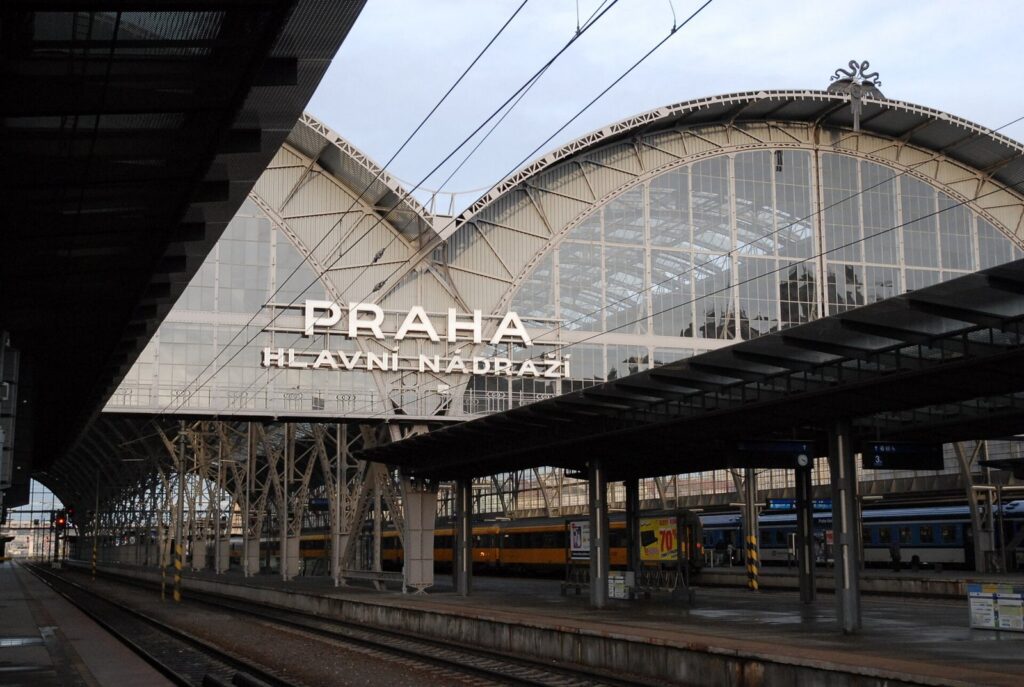
- Praha hlavní nádraží sign and arched roof above the station platforms: photo by Jan Konvalinka, Wikimedia Commons (CC BY-SA 3.0)
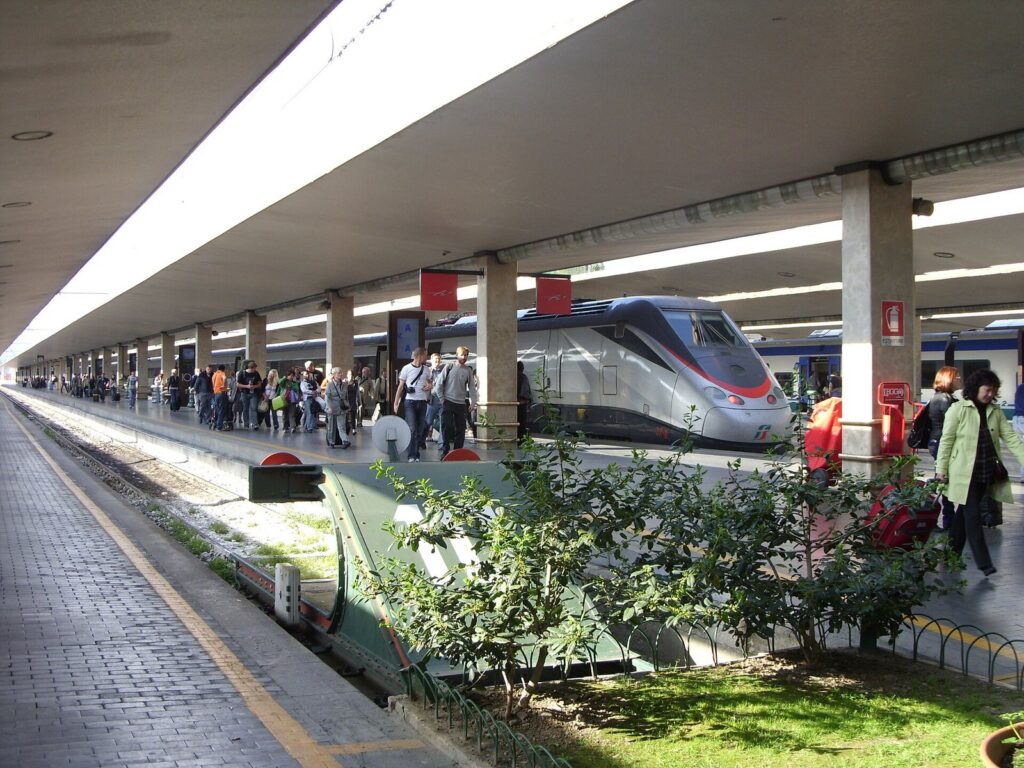
- A Frecciarossa train at a platform in Firenze Santa Maria Novella station: photo by Coclea, Wikimedia Commons (Public domain)
- Barcelona Sants station building seen across Plaça de Joan Peiró: photo by Matti Blume, Wikimedia Commons (CC BY-SA 4.0)
- A CP Alfa Pendular train at a platform in Porto Campanhã station: photo by Tiago Miranda from Valongo, Portugal, Wikimedia Commons (CC BY 2.0)
- Széchenyi Chain Bridge over the Danube with Pest and St Stephen’s Basilica behind: photo by Perituss, Wikimedia Commons (CC0)
- Blue European Sleeper couchette coaches at a platform in Paris Nord: photo by Bvcmz248.5, Wikimedia Commons (CC0)
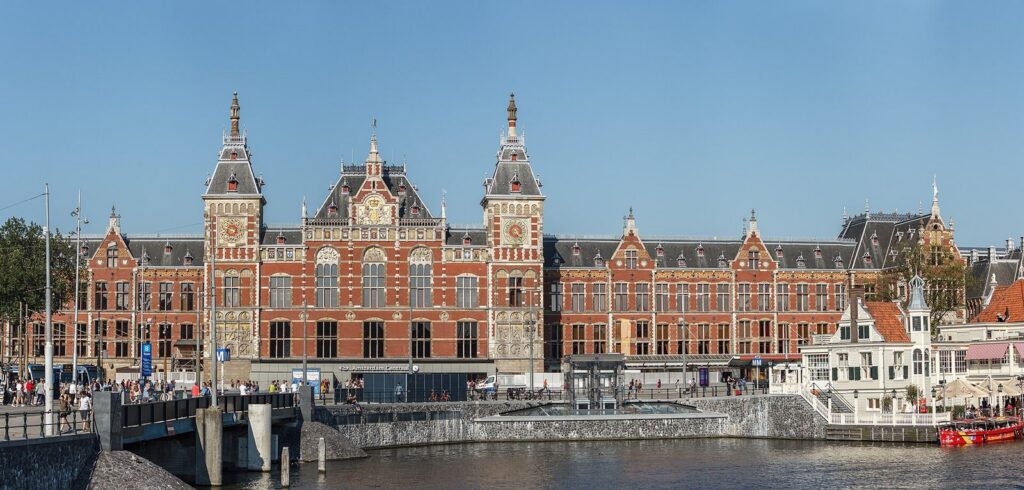
- Amsterdam Centraal station facade seen across the water on a clear day: photo by Slaunger, Wikimedia Commons (CC BY-SA 4.0)